





Basket
{{item.CourseTitle}}
Price: {{item.ItemPriceExVatFormatted}} {{item.Currency}}
Browse by Topic
Browse by Vendor

Unlimited Training
Attend all the top-notch LIVE Instructor-led Courses you want for the price of less than one course.

The healthcare and life sciences industries are undergoing a massive digital transformation. For decades, patient records and research data were stored on local servers or in paper files. Today, healthcare has moved to the cloud. This shift is not just about convenience but about saving lives through faster data processing, better collaboration, and improved patient outcomes. However, moving sensitive data to the cloud brings massive responsibility, which is where cloud certifications become essential for the modern workforce.
As hospitals, pharmaceutical companies, and biotech firms migrate their operations, they face unique challenges. They must handle massive datasets while following strict legal regulations. Professionals who hold a life sciences certification demonstrate specialized knowledge to manage these complex systems. These certifications confirm that a person understands how to build, maintain, and protect the digital infrastructure that stores our most sensitive health data.
This article explores how specialized training helps bridge the gap between technology and medicine. We will examine the different types of certifications available and why they are now a requirement for anyone working in healthcare IT. Whether you're an IT manager or a clinical researcher, understanding the value of cloud-based credentials is the first step toward a more secure future in medicine.
In healthcare, the margin for error is zero. A system outage or a data breach is not just a financial problem - it can delay a surgery or leak a patient's genetic history. Because the stakes are so high, the demand for healthcare IT certifications has skyrocketed. Employers need to know that their staff can handle the unique pressures of a regulated environment.
The cloud offers incredible benefits, including remote patient monitoring and AI-driven drug discovery. However, these innovations rely on a foundation of trust, and cloud training provides the roadmap for building that trust. It teaches professionals how to use tools from giants such as AWS, Microsoft Azure, and Google Cloud in ways that align with medical standards. Without this training, a company might misconfigure a database, leaving it open to the public internet.
Additionally, the life sciences sector relies on massive computing power for genomic sequencing and clinical trials. These tasks require scalable infrastructure, meaning the system can grow or shrink as needed. Professionals with cloud training certifications know how to set up these environments to be both cost-effective and powerful. By earning these credentials, professionals demonstrate they can manage the Shared Responsibility Model - the concept in which the cloud provider secures the hardware. In contrast, the healthcare organization must secure its data.
Certifications also help with career longevity. As more organizations move away from on-premise data centers, the roles for traditional IT staff are changing. Learning the cloud is no longer optional but the new standard for anyone who wants to lead at the intersection of technology and biology.
One of the biggest hurdles in adopting new technology is compliance. In the United States, HIPAA sets the standard for protecting sensitive patient data, while in Europe, the GDPR does the same. Those who pursue healthcare compliance certifications learn how to map these legal requirements to cloud environments.
These certifications go beyond basic IT skills. They teach:
By focusing on compliance, these credentials turn IT workers into digital-age compliance officers. They ensure that every click and every data transfer follows the rules, reducing the risk of massive fines and legal battles.
Innovation in life sciences often requires processing petabytes of data that traditional servers can't handle easily. Cloud platforms allow researchers to spin up hundreds of virtual machines in minutes, run simulations, and shut them down when finished. However, managing this requires a high level of skill and cloud certifications.
Certified professionals help organizations stay agile, enabling them to react quickly to new challenges. For example, during a global pandemic or a new drug discovery opportunity, teams with a deep understanding of cloud architecture spend less time fixing broken servers and more time supporting the scientists who are changing the world.
Efficiency also translates to cost savings, as the cloud can be expensive if managed poorly. Certified experts know how to use serverless computing and automated scaling to ensure the company only pays for what it uses. This allows more of the budget to go toward research and development rather than IT maintenance.
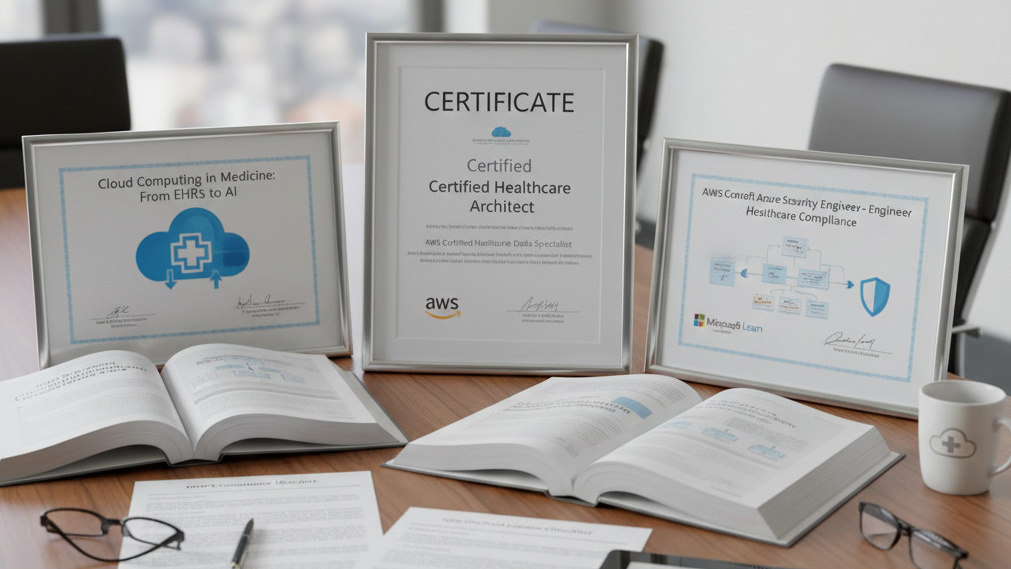
Choosing the right path can be confusing because there are so many options. For those working in medicine and biology, life sciences certifications often overlap with general cloud architecture but require a specific focus on data integrity. The most valuable certifications are those that demonstrate your ability to handle high-performance computing and secure data pipelines.
Most professionals start with a foundational or associate-level certification from a major provider. These provide a broad view of how the cloud works. However, for healthcare, specialty certifications are where the real value lies. These prove that you aren't just a general technology worker but a specialist who understands the nuances of a lab or hospital environment.
Key areas covered in these cloud training programs include:
Security is the top priority for any regulated industry. Cloud security certifications are designed to teach professionals how to build a defensive perimeter around data. In a healthcare context, this includes managing digital identities - for example, a doctor needs different access levels than a billing clerk.
These certifications teach advanced threat mitigation, including:
A security-focused healthcare certification is one of the most respected marks of expertise you can hold, especially for anyone aiming for a leadership role in healthcare IT.
While security is about protection, architecture is about design. If you're building a new telehealth platform or a database for clinical trial results, you need an architect. General cloud platform certifications provide the blueprint for building these systems. Examples include AWS Certified Solutions Architect or Microsoft Certified: Azure Solutions Architect.
In a healthcare environment, good architecture must have high availability. This means if one part of the system fails, another part takes over instantly, so doctors never lose access to their charts. Cloud architecture certification training teaches how to distribute data across multiple availability zones to prevent downtime. It also covers how to integrate the cloud with legacy systems.
For an organization to succeed, it cannot rely on just one or two tech geniuses. The entire IT department needs to be on the same page, which is why many hospitals and research firms implement healthcare certification programs.
To implement cloud security certification programs successfully, organizations should follow a structured approach:
By fostering a culture of continuous learning through cloud security certifications, organizations ensure they stay ahead. This also helps with employee retention, as technology professionals are more likely to stay with an organization that invests in their future.
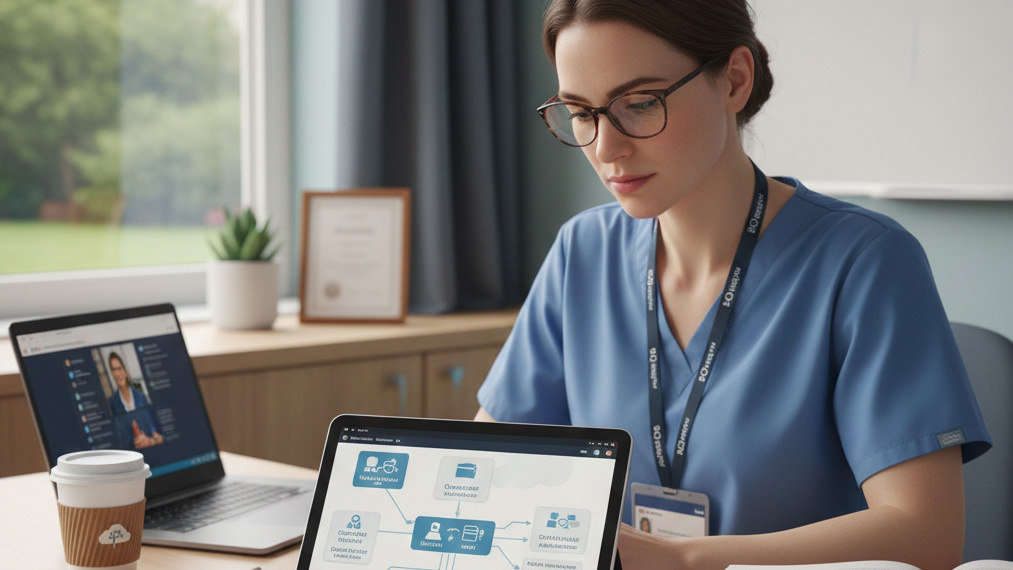
The future of healthcare lies in the hybrid cloud - a model in which some data remains on local servers for immediate access, while the rest is sent to the cloud for intensive processing. Future certifications will likely focus more on managing these split environments.
We are also seeing a rise in AI and machine learning, and soon, we may see specific healthcare IT certifications for healthcare AI security. As AI begins to diagnose diseases, the data used to train those models must be perfectly clean and secure. Professionals will need to prove they can manage the data lakes that feed these AI systems.
Finally, international data laws are becoming more complex. We may see a new wave of niche credentials that focus specifically on global data sovereignty. This will be vital for life sciences companies that conduct clinical trials across multiple continents. Staying updated through constant learning will be the only way to remain competitive.
The transition to the cloud is an unstoppable force in healthcare and life sciences. It offers the promise of personalized medicine, faster drug discovery, and accessible care, but this promise can only be fulfilled if the people managing the technology are highly skilled.
By investing in specialized training and earning recognized healthcare compliance certifications, professionals can ensure they're ready for the challenges ahead. These certifications are more than just badges on a resume - they are a commitment to excellence, security, and patient safety. As the industry evolves, those with the right knowledge will lead the way toward a healthier world.

Get Unlimited access to ALL the LIVE Instructor-led Microsoft courses you want - all for the price of less than one course.