



Basket
{{item.CourseTitle}}
Price: {{item.ItemPriceExVatFormatted}} {{item.Currency}}
Browse by Topic
Browse by Vendor

Unlimited Training
Attend all the top-notch LIVE Instructor-led Courses you want for the price of less than one course.

AZ-400 preparation is the process of separating what the exam measures from what day-to-day Azure DevOps work requires.
AZ-400, Designing and Implementing Microsoft DevOps Solutions, is the exam associated with the Microsoft Certified: DevOps Engineer Expert credential. It tests whether a candidate can design and implement DevOps practices across source control, CI/CD, security, compliance, monitoring, collaboration, and release management in Microsoft Azure environments.
The certification matters because DevOps work has moved from a narrow automation function into a core delivery discipline. The original market context still explains the demand: the global DevOps market was valued at $7 billion in 2021 and was expected to reach $26 billion by 2027. Those figures should be read as market research rather than a promise about any individual career outcome, but they do reflect why cloud teams continue to invest in delivery engineering, automation, reliability, and governance.
Azure is part of that demand because many organisations already run production workloads on Microsoft platforms. Microsoft Azure competes with AWS and Google Cloud, while Azure DevOps provides boards, repositories, pipelines, test plans, and artifact management for teams that want an integrated delivery toolchain. Public interest comparisons, including Google Trends data, can be useful signals, though they should not be treated as a complete measure of enterprise adoption.

DevOps connects software development and IT operations so that teams can deliver changes more safely and more frequently. Development teams write and test code, while operations teams run, secure, and support production systems. DevOps work reduces the friction between those activities through automation, shared ownership, repeatable environments, and fast feedback.
In an Azure context, that usually means building pipelines, managing repositories, deploying infrastructure, configuring approvals, handling secrets, publishing packages, observing production behaviour, and improving rollback plans. Tools vary by organisation. A team might use Azure Pipelines with GitHub, or combine Azure DevOps with Jenkins, SonarQube, and GitHub. The exam is vendor-specific, but the underlying skill is the ability to design a delivery system that is reliable, auditable, and maintainable.
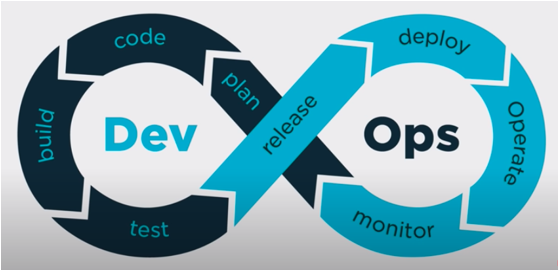
That point is important for AZ-400 preparation. Candidates who prepare only by memorising YAML syntax often struggle with questions that require judgement. Microsoft’s exam style tends to reward understanding why a team would use branch policies, deployment gates, service connections, package feeds, canary releases, or observability signals in a given scenario.
The AZ-400 objective domains map closely to responsibilities found in mature DevOps teams. Instrumentation and Site Reliability Engineering relate to alerts, dashboards, service-level thinking, error budgets, and post-incident learning. Security and compliance appear in secret management, least-privilege service connections, code scanning, dependency review, software bill of materials practices, and audit trails.
Source control objectives translate into branching strategy, pull request policy, merge discipline, repository structure, and traceability from work item to deployment. Continuous integration objectives cover build validation, test automation, artifact creation, package feeds, and quality checks. Continuous delivery and release management cover deployment stages, approvals, environments, rollback plans, deployment slots, blue/green releases, canary releases, and post-deployment verification.
| AZ-400 exam area | How it appears in real Azure DevOps work |
|---|---|
| Instrumentation and SRE strategy | Designing telemetry, alert rules, dashboards, incident response routines, and service health reviews. |
| Security and compliance | Protecting secrets, scanning dependencies, enforcing approvals, controlling service connections, and preserving audit evidence. |
| Source control | Choosing repository structures, branch policies, pull request checks, and traceability practices. |
| Collaboration | Connecting boards, repositories, release notes, approvals, documentation, and feedback loops across teams. |
| Continuous integration | Building, testing, validating, packaging, and publishing application artifacts consistently. |
| Continuous delivery and release management | Designing deployment stages, gates, approvals, rollback strategies, and progressive exposure patterns. |
A practical example shows the connection. Consider a team that releases a customer-facing web application every two weeks. A pipeline deploys successfully, but monitoring shows increased latency after release. A DevOps engineer is expected to know how to stop further rollout, inspect deployment history, compare telemetry, trigger rollback or route traffic to a healthy slot, and document follow-up action. AZ-400 preparation should therefore include deployment strategy and monitoring practice, because interviewers commonly probe rollback, incident response, approvals, and post-deployment tests rather than asking candidates to recite pipeline keywords.
The Microsoft Certified: DevOps Engineer Expert credential is aligned with an associate-level foundation in either Azure administration or Azure development. Candidates should verify the current certification requirements on Microsoft Learn before booking, because Microsoft can revise exam and certification relationships. The practical choice is usually between the administrator route and the developer route.
Administrators tend to find AZ-104 the lower-friction route because it strengthens identity, networking, compute, storage, governance, monitoring, and operational control. That background helps with service connections, environment design, RBAC, deployment targets, infrastructure as code, and production troubleshooting. Developers tend to find AZ-204 more natural because it covers application design, APIs, Azure services, authentication, storage integration, containers, and event-driven patterns, all of which help when building pipelines that support real application delivery.
The harder route is not always the wrong route. A developer who chooses AZ-104 should deliberately review Azure networking, identity, policy, monitoring, and resource management before starting AZ-400. An administrator who chooses AZ-204 should spend time with application configuration, automated tests, package management, container build flows, and API deployment patterns. This cross-training matters because AZ-400 sits between application and platform work.
Microsoft’s exam outline is the authoritative source for the current objective domains, and candidates should review it before committing to a study plan. The source article listed the topic weights as instrumentation strategy and SRE strategy at 5–10% each, security and compliance at 10–15%, source control at 10–15%, communication and collaboration at 10–15%, continuous integration at 20–25%, and continuous delivery and release management at 10–15%. Those weights are useful for prioritisation, but Microsoft may update exam content, so the official exam page should be checked close to the test date.
A good preparation plan starts with Azure DevOps fundamentals, then moves into applied design. Candidates should understand organisations, projects, repositories, boards, pipelines, artifacts, service connections, environments, approvals, and agent pools. From there, preparation should move into CI/CD design, dependency management, release patterns, security controls, monitoring, feedback, governance, and collaboration.
The common mistake is spending too much time on isolated tool features. AZ-400 is less about remembering every menu item and more about selecting the right DevOps approach for a scenario. For example, a question may describe regulatory controls, production approvals, deployment windows, or a distributed team structure. The correct answer often depends on recognising the operational constraint before choosing the Azure DevOps feature.
A four-week plan can work for candidates who already use Azure DevOps regularly, but six weeks is a more realistic pace for working professionals. The goal is to alternate theory with hands-on labs so that each concept is practised in a pipeline, repository, or release workflow. A structured course can help candidates keep that rhythm; Readynez, for example, offers AZ-400 Azure DevOps Engineer Expert preparation for teams or individuals who prefer guided exam-aligned study.
| Week | Main objective | Hands-on practice | Review focus |
|---|---|---|---|
| Week 1 | Review the official exam outline, Azure DevOps project structure, Git workflows, boards, repositories, and permissions. | Create a sample project, repository, work items, branch policies, and pull request validation rules. | Identify weak areas from the objective list and decide whether admin or developer foundations need reinforcement. |
| Week 2 | Study continuous integration, build validation, test automation, package creation, and artifact feeds. | Build a YAML pipeline that restores dependencies, runs tests, scans code quality, and publishes an artifact. | Review why build stages fail and how quality gates affect release readiness. |
| Week 3 | Study continuous delivery, deployment stages, approvals, environments, deployment slots, and rollback approaches. | Create a multi-stage deployment with a development stage, a test stage, and a controlled production-like stage. | Practise explaining when to use approvals, checks, blue/green deployment, canary deployment, or manual intervention. |
| Week 4 | Focus on security, compliance, dependency management, service connections, secrets, and governance. | Move secrets out of pipeline variables, restrict service connection scope, and publish packages through a feed. | Review least privilege, auditability, software supply chain risk, and compliance evidence. |
| Week 5 | Study observability, SRE practices, feedback loops, release notes, dashboards, and incident response. | Add monitoring signals, post-deployment validation, stakeholder notifications, and work item traceability. | Run scenario drills based on failed deployments, broken tests, dependency vulnerabilities, and production alerts. |
| Week 6 | Consolidate with practice questions, case-study review, and timed decision-making. | Rebuild the pipeline from memory, then document the release and rollback playbook. | Review incorrect answers by objective domain rather than by question wording. |
The review cadence matters. At the end of each week, candidates should write a short explanation of what each lab proved, what failed, and which exam objective it supported. This turns practice into recall and prevents the common problem of completing labs without understanding the design choices behind them.
A useful AZ-400 lab does not need to be expensive or production-like. It should be small enough to rebuild, safe enough to delete, and broad enough to cover the exam domains. Candidates can use a sample monorepo with a simple application, tests, infrastructure templates, pipeline YAML, and documentation. The lab should include a repository, a build pipeline, a release flow, environments, approvals, a package feed, service connections, and basic monitoring.
Cost control should be part of the exercise. Candidates should use low-cost resources where possible, apply naming conventions, tag lab resources clearly, avoid unnecessary public exposure, and delete resources after practice. A lab that teaches cleanup, access control, and auditability is more valuable than one that only proves a deployment can run.
The following small YAML example demonstrates the kind of pipeline structure candidates should understand. It is intentionally compact: the purpose is to show staged validation and artifact publication, not to represent a production template.
trigger:
  branches:
    include:
      - main

pool:
  vmImage: ubuntu-latest

stages:
- stage: Build
  jobs:
  - job: ValidateApplication
    steps:
    - checkout: self
    - script: dotnet restore src/Contoso.Web/Contoso.Web.csproj
      displayName: Restore dependencies
    - script: dotnet test tests/Contoso.Web.Tests/Contoso.Web.Tests.csproj --configuration Release
      displayName: Run automated tests
    - script: dotnet publish src/Contoso.Web/Contoso.Web.csproj --configuration Release --output $(Build.ArtifactStagingDirectory)
      displayName: Publish application
    - publish: $(Build.ArtifactStagingDirectory)
      artifact: contoso-web

- stage: ReleaseReadiness
  dependsOn: Build
  jobs:
  - job: ReviewArtifact
    steps:
    - download: current
      artifact: contoso-web
    - script: echo "Artifact downloaded for controlled environment deployment."
      displayName: Confirm artifact availability
This example separates build validation from release readiness and publishes an artifact that later stages can consume. Candidates should extend this pattern in a lab by adding environment checks, approvals, service connection restrictions, variable groups, secret handling, and post-deployment tests.
One frequent pitfall is over-memorising YAML. Syntax matters, but the exam and the job both require design judgement. Candidates should know why a pipeline is split into stages, where approvals belong, how artifacts move through environments, and how failed deployments are contained.
A second pitfall is skipping governance. Service connections, role assignments, branch policies, package feeds, protected environments, and audit trails are often treated as secondary topics during study. In real teams, these controls determine whether a deployment process can be trusted by security, compliance, and operations stakeholders.
A third pitfall is ignoring dependency and package management. Artifact feeds, versioning, dependency review, and vulnerability scanning are part of modern software delivery. Candidates who practise only source control and deployments may miss the supply chain aspect of DevOps work.
Another mistake is preparing with actual exam-item dumps. That approach violates exam integrity and does not build the judgement needed for scenario questions or real delivery work. Legitimate practice should use official skills outlines, hands-on labs, documentation, and practice questions that teach reasoning without exposing protected exam content.
Microsoft uses scaled scoring for certification exams, and the original article noted a passing score of 700. Exam length, question count, pricing, delivery options, rescheduling policies, and regional availability can change. Candidates should treat Microsoft Learn and the official exam registration flow as the source of truth before booking or rescheduling.
Pricing should be checked during registration because it can vary by country or region and may change. If a candidate needs to reschedule, Microsoft’s current rescheduling and cancellation policy should be reviewed before making changes, especially close to the appointment time. Candidates should also review exam policies on identification, online proctoring, breaks, and confidentiality before exam day.
Case-study style questions deserve special preparation. The best practice is to read the business constraint first, then the technical requirement, then the proposed solution. Many wrong answers are technically possible but operationally weak because they overlook compliance, access control, rollback, traceability, or team workflow.
A candidate does not need to be a full-time software developer to become an Azure DevOps engineer, but some development fluency is important. Scripting, repository structure, application configuration, automated tests, dependency restore, package publishing, and container build processes all appear in day-to-day DevOps work. Python, Bash, PowerShell, or another scripting language can help candidates automate repetitive tasks and troubleshoot pipeline behaviour.
Likewise, developers moving into DevOps need operational fluency. Networking, identity, DNS, certificates, monitoring, incident response, backup, disaster recovery, and access control all influence deployment design. The strongest AZ-400 candidates are comfortable discussing both code flow and production risk.
AZ-400 is a strong certification signal, but it is not a substitute for hands-on delivery experience. Candidates should pair exam preparation with a working lab that includes repositories, pipelines, environments, approvals, artifacts, secrets, monitoring, and rollback practice.
AZ-104 is usually the more natural route for administrators because it reinforces Azure infrastructure, identity, governance, networking, monitoring, and operational control. Administrators should still review developer topics such as build automation, testing, package management, and application deployment before sitting AZ-400.
AZ-204 is usually the more natural route for developers because it strengthens application architecture, Azure services, authentication, storage integration, APIs, and containerised workloads. Developers should still review administrator topics such as RBAC, service connections, network boundaries, Azure Policy, monitoring, and production operations.
The final week should focus on scenario drills, weak objective domains, and exam logistics rather than learning new tools. Candidates should rebuild a small pipeline from memory, explain each design choice, review incorrect practice answers, and confirm the current Microsoft exam policies before the appointment.
The most effective AZ-400 preparation treats the exam as a structured way to build delivery judgement. Candidates should be able to explain how code moves from a commit to production, how quality and security checks protect that path, how approvals and environments reduce operational risk, and how telemetry informs the next release.
A practical next step is to choose the right associate foundation, build a small end-to-end lab, follow a weekly study cadence, and practise case-study reasoning before booking the exam. If an organisation needs a guided plan for Azure DevOps upskilling, it can contact Readynez to discuss a certification path that fits its team’s current Azure and DevOps maturity.

Get Unlimited access to ALL the LIVE Instructor-led Microsoft courses you want - all for the price of less than one course.
You're viewing our global site from United States
Would you like to view the site in
English
with prices in
Dollar?