





Basket
{{item.CourseTitle}}
Price: {{item.ItemPriceExVatFormatted}} {{item.Currency}}
Browse by Topic
Browse by Vendor

Unlimited Training
Attend all the top-notch LIVE Instructor-led Courses you want for the price of less than one course.

As organizations across Canada migrate their critical operations to the cloud, the landscape of digital threats becomes increasingly complex. This new reality demands more than just frontline security measures; it requires a strategic vision for enterprise-wide defence. The individual responsible for creating this vision is the cybersecurity architect, a professional who translates business objectives into robust security blueprints. For those operating within Microsoft’s vast ecosystem, achieving the official Microsoft Cybersecurity Architect Expert certification is the ultimate validation of their skills.
This credential proves an IT professional can design and evolve security solutions across Microsoft 365, Azure, and complex hybrid environments. This guide will serve as your blueprint, exploring the certification’s core components, effective preparation strategies, and the career trajectory it enables. Earning this expert-level designation signifies your ability to master Microsoft’s security portfolio and lead an organization’s defence strategy from the top down.
The Microsoft Cybersecurity Architect certification is an expert-level credential that validates a professional’s ability to design and evolve an organization's security strategy. It confirms mastery in creating a comprehensive security framework, applying risk mitigation practices, and navigating the complexities of regulatory compliance, which is particularly relevant for Canadian businesses adhering to frameworks like PIPEDA.
This certification is not intended for newcomers. It targets seasoned professionals, including:
Prospective candidates are expected to possess a profound understanding of security operations, identity management, and the functional capabilities of Microsoft's security suite. Microsoft suggests having three to five years of direct experience in cybersecurity architecture before pursuing this certification. The journey culminates in passing the SC-100: Microsoft Cybersecurity Architect exam. This challenging exam assesses your capacity to transform high-level business requirements into detailed technical security architecture, covering Microsoft Azure, Microsoft 365, and Microsoft Defender. Success signals that you are a leader in the field of Microsoft cybersecurity and Azure security.
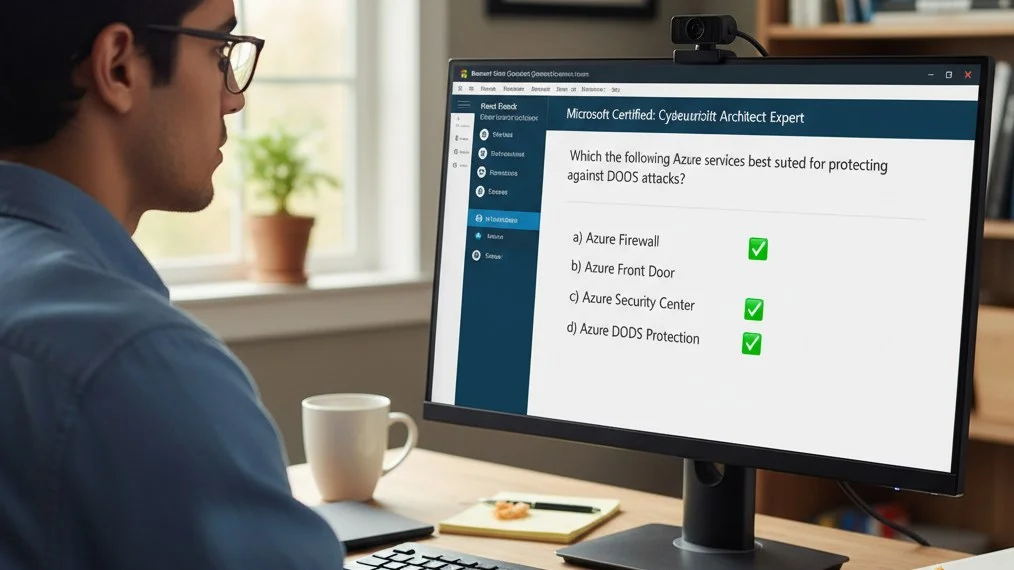
To earn the Microsoft Cybersecurity Architect Expert certification, you must pass the SC-100 exam. This is a rigorous test of expert-level abilities, employing a mix of question formats like multiple-choice, drag-and-drop, and in-depth case studies. These case studies provide complex business scenarios, requiring you to design appropriate security solutions based on the information given.
While there are no mandatory prerequisites for taking the exam, candidates are strongly advised to hold an associate-level certification first. Lacking this foundational knowledge would make success highly unlikely. The recommended prerequisites are one of the following:
Typically, the exam contains 40-60 questions to be completed within a 150-minute timeframe, with a passing score of 700 out of 1000. A deep comprehension of cloud security, especially relating to Azure cybersecurity, is critical. Passing demonstrates your capability to architect security across an entire enterprise, including hybrid and cloud-native systems, making this Microsoft security certification a highly respected credential.
The exam is structured around four critical skill areas. A comprehensive understanding of each is necessary to succeed.
Successfully preparing for this exam requires more than simple memorization; it demands the development of practical architectural design skills. There are two primary avenues for preparation: self-directed study and formal instructor-led training. Each path can lead to earning your Azure Security Certification.
A flexible and economical way to prepare is through self-paced learning. The Microsoft Learn platform is an outstanding resource, offering structured learning paths that align perfectly with the exam’s objectives. These free, self-guided modules provide a solid foundation in everything from Zero Trust strategy to security governance. To complement this, many candidates use third-party study guides and practice exams to simulate the testing environment and pinpoint areas needing more focus. This approach requires discipline but allows you to master the material needed for all types of cybersecurity certifications on your own schedule.
For those who thrive in a structured setting or are on a tighter schedule, instructor-led training is a superior choice. Official courses, offered through certified partners, condense the material into a focused format. The main benefit is direct access to an expert instructor for immediate clarification and deeper insights. These programs heavily emphasize hands-on labs, which are crucial for an Azure security architect who must design zero-trust frameworks, evaluate Microsoft security certification tools, and implement comprehensive architectures. This guided practice is invaluable for truly mastering the required skills.
Passing the SC-100 exam requires a shift in mindset. Here are key tactics for your preparation:

Obtaining the Microsoft Cybersecurity Architect certification marks a pivotal moment in a security professional's career. It signals to employers that you possess the advanced expertise needed for enterprise-scale security design and opens the door to several rewarding leadership roles:
The demand for experts who can align security technology with business strategy is exceptionally high. The Azure security architect role is consistently ranked as a top-paying and in-demand IT job. While salaries fluctuate based on location and experience, certified architects command premium compensation that reflects the critical nature of their work in protecting an organization's most vital assets.
Cybersecurity is a field in constant motion. For a certified Microsoft Cybersecurity Architect, learning is an ongoing professional duty. The certification is valid for one year, and you must pass a free online renewal assessment via Microsoft Learn to maintain it. This ensures your skills remain current. To keep your expertise sharp, follow these best practices:
By committing to these practices, you ensure your security architecture certification is just the beginning. It is an investment that marks the start of a long and impactful career at the forefront of enterprise defence.

Get Unlimited access to ALL the LIVE Instructor-led Microsoft courses you want - all for the price of less than one course.