



Basket
{{item.CourseTitle}}
Price: {{item.ItemPriceExVatFormatted}} {{item.Currency}}
Browse by Topic
Browse by Vendor

Unlimited Training
Attend all the top-notch LIVE Instructor-led Courses you want for the price of less than one course.

Many Canadian businesses are accumulating vast amounts of data, veritable digital goldmines. However, without a strategy to manage it, this data is often chaotic, siloed across various systems, and unsecured. It’s a classic "garbage in, garbage out" scenario, where the potential of machine learning (ML) and artificial intelligence (AI) remains untapped because the foundational data is unreliable.
Organizations now recognize that hiring data scientists isn't a complete solution. Before insights can be extracted, the data itself must be structured, cleaned, and made accessible. This is where a specialized professional comes in: the data engineer. They are the architects of the data landscape, creating the robust pipelines that feed high-quality data to analytics and ML models, turning raw information into a strategic asset.
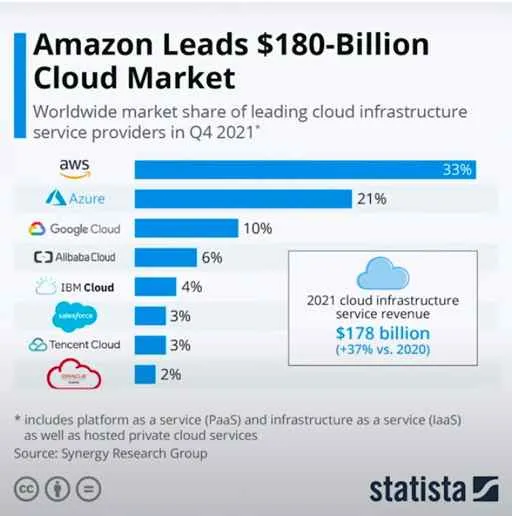
The demand for skilled data engineers is surging as more companies migrate to cloud platforms like Microsoft Azure. This has created a significant talent gap, with recruiters actively seeking qualified individuals who can manage and leverage data effectively. For those with the right skills, it represents a major career opportunity.
At its core, the role of a data engineer is to build and maintain the systems that deliver data. They are distinct from data scientists, who analyze that data. A data engineer works upstream, sourcing, transforming, and organizing data. A data scientist or analyst works downstream, using the prepared data to uncover trends and build models.
Think of it this way: data engineers construct the highway, and data scientists drive the cars on it. A company with data scientists but no data engineers will inevitably face bottlenecks. The primary duties revolve around a few key areas:
In some organizations, particularly smaller ones, the data engineering role may be a generalist position with some overlap into data analysis. However, the foundational skill set remains focused on data architecture and management.
To succeed as an Azure Data Engineer, a specific blend of technical knowledge and practical skills is necessary. Employers typically look for a solid foundation in computer science principles and hands-on experience with data-centric technologies.
Proficiency in certain languages and tools is non-negotiable. While you don't need to be a senior developer, you must write clean, functional code that others can understand and maintain.
Avoid the pitfall of chasing every new tool. Master the fundamentals—like Python, SQL, and data modeling—before specializing. A strong foundation is far more valuable than a superficial knowledge of hyped technologies.
Technical expertise alone isn't enough. Data engineers work at the intersection of business and technology, so collaboration is key. You must communicate with different departments to understand their needs, map out data requirements, and ensure the solutions you build are genuinely useful. Strong storytelling and persuasion skills are also invaluable for getting buy-in from stakeholders and moving projects forward.
For those looking to formally prove their abilities, the DP-203 certification is the industry standard. Earning the designation of Microsoft Certified Azure Data Engineer Associate validates your subject matter expertise in using Azure's suite of data tools.
The DP-203 exam assesses your skills across four main domains:
Examinees can expect around 40-60 questions in various formats, including multiple-choice, drag-and-drop, and scenario-based problems. You get 120 minutes to complete the test, and a score of 700 out of 1000 is required to pass. A key part of this involves designing and managing secure and compliant data pipelines, a crucial skill given Canadian privacy laws like PIPEDA.
While Microsoft provides a free learning path on its website, self-study can be challenging for busy professionals. If you're currently working full-time, such as a data analyst aiming for a promotion, finding the time and discipline to cover the extensive curriculum can be difficult.
For this reason, many candidates opt for an instructor-led training course. This approach provides not only structured, practical learning but also invaluable mentorship from industry experts who specialize in certification preparation. It’s an efficient path to ensure you are fully prepared for the exam's breadth and depth.
Does the DP-203 certificate guarantee you a job? No certification can do that. Its purpose is to validate your skills and make your CV stand out to employers. The next step is to actively pursue opportunities by attending local data engineering meetups, networking on professional platforms, and showcasing your abilities.
The certificate is a powerful tool that opens doors, but you still have to walk through them. By combining validated expertise with proactive networking, you can secure a top-tier role in this rapidly growing field.
If you have more questions about embarking on this career path or the DP-203 exam itself, please get in touch with our team.

Get Unlimited access to ALL the LIVE Instructor-led Microsoft courses you want - all for the price of less than one course.
You're viewing our Canada (CAD) site from United States
Would you like to view the site in
English
with prices in
Dollar?