





Basket
{{item.CourseTitle}}
Price: {{item.ItemPriceExVatFormatted}} {{item.Currency}}
Browse by Topic
Browse by Vendor

Unlimited Training
Attend all the top-notch LIVE Instructor-led Courses you want for the price of less than one course.

In today’s corporate environment, cybersecurity leadership has moved from the server room to the boardroom, becoming an essential pillar of executive strategy. For any large Canadian enterprise, the management of information risk is fundamental to maintaining regulatory compliance, customer trust, and a competitive edge. As the threat landscape evolves, senior security leaders require a sophisticated combination of business acumen and technical insight. Choosing the right cybersecurity leadership certification is a strategic decision that directly supports corporate governance and resilience against complex cyber threats.
Three credentials stand out for seasoned professionals: the CISSP, CISM, and CCSP. Each offers a distinct framework for managing different facets of enterprise risk. This article provides a risk-led comparison to help you determine which certification best aligns with your organization's most pressing security challenges—whether that involves strategic governance, operational stability, or cloud transformation. Understanding the unique value of each will empower you to guide your professional development in a way that serves Canada's unique business and regulatory landscape.
The Certified Information Security Manager (CISM) credential focuses squarely on the intersection of business goals and security. It is designed for leaders who must translate technical risks into business impacts and communicate them effectively to stakeholders and board members. The CISM framework is less about hands-on technical configuration and more about building and managing an information security program that provides demonstrable return on investment.
Its core domains—Information Security Governance, Information Risk Management, Program Development and Management, and Incident Management—are the cornerstones of top-down security leadership. A CISM-certified professional is equipped to answer critical questions about risk appetite, resource allocation, and ensuring security measures align with corporate strategy. For organizations navigating compliance with Canadian regulations such as PIPEDA or PHIPA, the governance-centric approach of the CISM is invaluable for demonstrating due diligence.
The CISSP (Certified Information Systems Security Professional) is frequently seen as the benchmark for comprehensive security expertise. It provides a wide-ranging, 360-degree view of the security landscape, making it ideal for leaders responsible for mitigating broad operational and technical risks. Where CISM focuses on the "why," CISSP dives deep into the "how," covering eight extensive domains that span from security and risk management to communications and network security, and software development security.
For a security leader tasked with designing a resilient, defence-in-depth architecture, the CISSP provides an essential foundation. It validates the knowledge needed to create security policies that govern thousands of employees and manage complex infrastructures that may span multiple Canadian provinces. Professionals holding the CISSP credential understand how to integrate various security controls—technical, administrative, and physical—into a cohesive program that protects the entire enterprise from sophisticated threats.
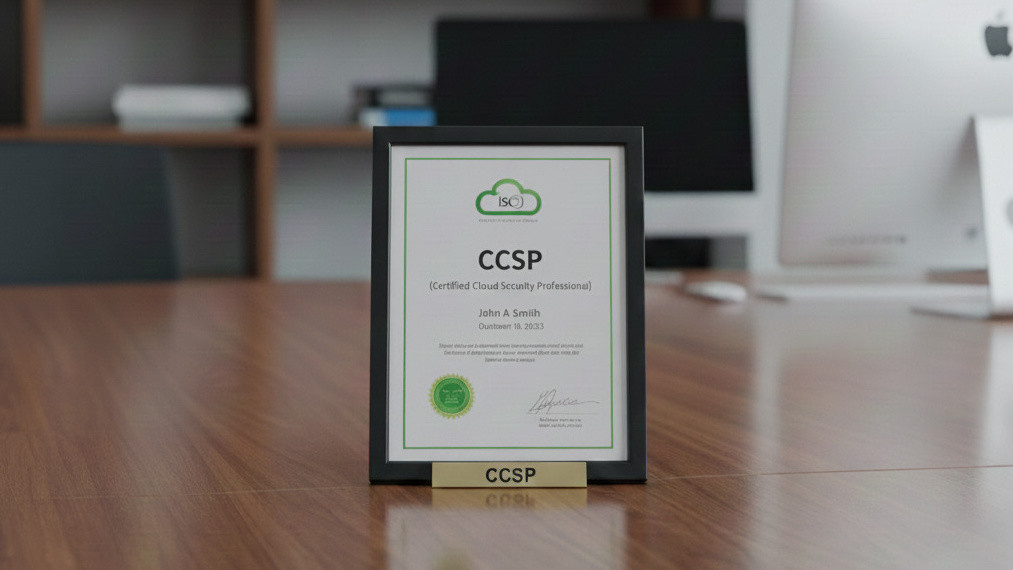
The rapid pivot to cloud services has introduced a new category of risk that many organizations are still learning to manage. The CCSP (Certified Cloud Security Professional) was created specifically to address the unique challenges of cloud computing. As businesses increasingly rely on providers like AWS, Azure, and Google Cloud, leaders must understand the nuances of the shared responsibility model.
The CCSP certification equips leaders to manage the risks associated with data stored in off-premise infrastructure. This includes expertise in cloud application security, platform security, and legal, risk, and compliance issues. A critical aspect for Canadian companies is data sovereignty—ensuring that data storage and handling comply with national privacy laws. The CCSP provides the framework to audit cloud providers, implement robust identity and access management, and secure data in transit and at rest in a multi-cloud environment. It is the essential credential for leaders guiding an organization’s digital transformation safely.
Selecting the right certification is less about which one is "better" and more about which body of knowledge solves your most immediate and strategic problems. Consider your primary function and your organization's direction:
|
Factor |
CISSP |
CISM |
CCSP |
|
Primary Risk Focus |
Broad Operational & Technical Risk |
Strategic Business & Governance Risk |
Cloud & Third-Party Vendor Risk |
|
Ideal Role |
Security Director, Security Architect |
CISO, Information Security Manager |
Cloud Architect, Enterprise Architect |
|
Key Skillset |
Designing secure systems |
Managing security programs |
Securing cloud infrastructure |
|
Governance Level |
Moderate |
Very High |
High (Cloud-Specific) |

It is a misconception that these credentials are in competition. For senior leaders, they are often complementary. Many start with the broad foundation of the CISSP, then add the CISM to strengthen their strategic management capabilities. As their organization embraces the cloud, they may pursue the CCSP to master that specific domain.
Holding multiple certifications signals an unparalleled commitment to the field. For an organization, having leaders with this combination of skills is a powerful asset. It fosters a culture of continuous learning and ensures the leadership team can address risk from every angle—strategic, operational, and architectural. This level of certified expertise builds confidence with clients, partners, and regulatory bodies like the Canadian Centre for Cyber Security, proving the organization is prepared for the modern threat environment.
Ultimately, investing in these advanced security management certifications is an investment in organizational resilience. The right certification empowers a leader to address the most pertinent risks facing their business today while preparing it for the challenges of tomorrow. By carefully selecting a path—or paths—that align with your responsibilities, you can more effectively safeguard your enterprise in an increasingly complex digital world.

Get Unlimited access to ALL the LIVE Instructor-led Microsoft courses you want - all for the price of less than one course.