





Basket
{{item.CourseTitle}}
Price: {{item.ItemPriceExVatFormatted}} {{item.Currency}}
Browse by Topic
Browse by Vendor

Unlimited Training
Attend all the top-notch LIVE Instructor-led Courses you want for the price of less than one course.

In the complex digital landscape of today, Canadian businesses depend on technology, but this dependency introduces significant risks such as data breaches and system downtime. To counter these challenges, organizations need experts who can skillfully manage technology, security, and risk. This is where globally recognized ISACA certifications come into play, offering a clear path for professionals to specialize and validate their expertise. Three of the most respected credentials—CISA, CRISC, and CISM—represent distinct but complementary disciplines in IT governance.
These certifications are far more than just acronyms to add to a resume; they signal a deep commitment to industry standards and proven capabilities. For professionals at a career crossroads, understanding the unique focus of each certification is crucial. The CISA builds mastery in IT audit and assurance, the CRISC hones skills in managing enterprise IT risk, and the CISM prepares leaders to direct corporate information security programs. Choosing the right one can define a career trajectory and is essential for building what can be called a "risk-ready" organization—one that not only anticipates threats but has the certified talent to manage and mitigate them effectively.
The CISA certification (Certified Information Systems Auditor) is widely considered the gold standard for professionals in IT audit, control, and assurance roles. A CISA-certified individual is trained to evaluate an organization's IT systems and processes from an assurance viewpoint, ensuring they operate with integrity and efficiency.
This credential empowers professionals to:
Holders of the ISACA CISA are recognized for their ability to assess vulnerabilities, report on compliance, and verify the effectiveness of system controls. The exam covers five key domains, including the process of auditing, IT governance, systems acquisition and implementation, IT operations, and the protection of information assets. This makes them indispensable for maintaining a strong compliance and security posture.
For professionals who want to act as the essential bridge between IT operations and business strategy, the ISACA CRISC (Certified in Risk and Information Systems Control) is the ideal credential. It is designed for those who identify, assess, and manage IT-related business risks. A CRISC professional’s work is centred on a continuous four-step cycle: Identification, Assessment, Response, and Monitoring.
This holistic approach enables them to embed risk-aware thinking throughout the organization’s culture. Key contributions of a CRISC professional include:
Consider an organization planning a migration to a new cloud platform. An ISACA CRISC professional would spearhead the risk assessment, identifying potential issues like data sovereignty, vendor lock-in, and compliance gaps. They would then recommend specific controls, such as data encryption standards and contractual clauses, providing leadership with a clear, risk-informed basis for their final decision.
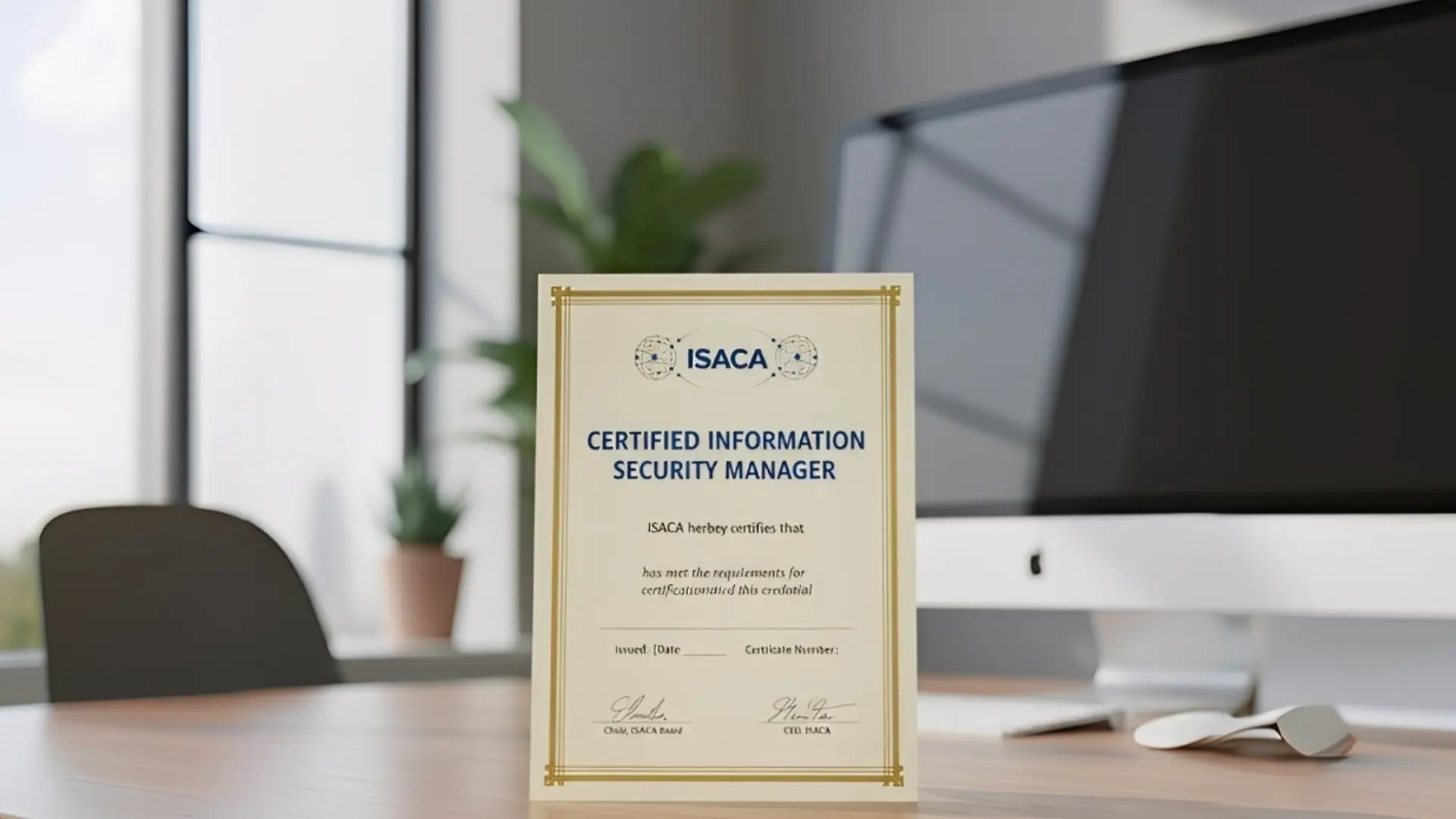
While the CISA audits existing controls and the CRISC manages specific risks, the CISM (Certified Information Security Manager) professional is the strategic leader tasked with protecting the organization's information assets. The ISACA CISM is a management-focused certification that validates an individual’s ability to design, build, and oversee an enterprise-wide information security program. It elevates the holder from a technical expert to a strategic business leader.
A CISM-certified leader possesses a unique blend of technical knowledge and business acumen. Their role revolves around four critical domains:
An organization led by a CISM benefits from a mature security posture, reduced incident impact, and stronger board confidence, as they know the program is guided by industry best practices and aligned with strategic goals.
Selecting the right certification depends entirely on your career aspirations and current role. While CISA, CRISC, and CISM are distinct, they exist on a continuum of IT governance, risk, and security. Here is a breakdown to help guide your decision:
CISA (Certified Information Systems Auditor)
CRISC (Certified in Risk and Information Systems Control)
CISM (Certified Information Security Manager)

Investing in ISACA certifications delivers substantial returns for both individual careers and the organizations that employ them. Top-tier organizations across Canada, from the financial institutions on Bay Street to the tech hubs in Vancouver and Waterloo, actively seek out these credentials.
Holding a CISA, CRISC, or CISM leads to enhanced employability, greater leadership opportunities, and higher earning potential. For the business, building a team of certified professionals is a strategic imperative. In an era of rapid digital transformation, sophisticated cybersecurity threats, and increasing regulatory pressure, these experts provide the structured frameworks needed to innovate securely. Guidance from bodies like the Canadian Centre for Cyber Security consistently highlights the need for the exact skills these certifications validate.
The future roles for these professionals will become even more strategic. CISA holders will audit AI and blockchain, CRISC experts will advise on geopolitical and supply chain risks, and CISM leaders will be key members of the executive team, ensuring resilience is woven into the corporate fabric. By hiring and developing ISACA-certified talent, organizations are not just filling roles—they are building a foundation for secure and sustainable growth.
In the end, as technology continues to reshape our world, the need for trusted experts in IT audit, risk, and security will only escalate. The ISACA CISA, CRISC, and CISM certifications provide clear, respected pathways for professionals to develop this critical competence and deliver immense value to their organizations.

Get Unlimited access to ALL the LIVE Instructor-led Microsoft courses you want - all for the price of less than one course.