





Basket
{{item.CourseTitle}}
Price: {{item.ItemPriceExVatFormatted}} {{item.Currency}}
Browse by Topic
Browse by Vendor

Unlimited Training
Attend all the top-notch LIVE Instructor-led Courses you want for the price of less than one course.

The rapid integration of artificial intelligence into the business landscape has left many decision-makers evaluating their options. Your teams might be using ChatGPT for daily tasks, while industry news highlights the power of Microsoft Azure OpenAI for enterprise applications. While both leverage powerful models like GPT-4o, they are fundamentally different tools designed for separate purposes. Understanding which one aligns with your strategic goals is crucial.
This guide offers a practical framework for Canadian businesses to determine whether the ready-to-use ChatGPT application or the developer-focused Azure OpenAI Service is the right fit. We'll explore the core distinctions, focusing on security, scalability, customization, and compliance needs.
The most important difference lies not in the AI's intelligence, but in its delivery. Think of it as choosing between buying a finished car from a dealership versus sourcing a high-performance engine and chassis to build a custom vehicle.
Your choice should begin with a clear understanding of what you want to achieve. Are you aiming for broad productivity gains or building a specific, integrated tool?
ChatGPT excels as a general-purpose assistant for individuals and teams. Its strength lies in its accessibility and speed. It’s the ideal tool for tasks that don't involve sensitive data, such as:
As a standalone product, it enables employees to enhance their personal efficiency without needing support from an IT department.
The Azure OpenAI Service is the foundation for building enterprise-grade AI solutions. Organizations choose this path when they need to create custom applications that are deeply integrated with their business processes and data. It provides the control, security, and scalability required for tasks like:
For any large-scale deployment, especially in regulated industries, several factors make Azure the more suitable choice.
This is arguably the most significant differentiator for businesses. When you use the Azure OpenAI Service, your data remains your own. It is processed within your private Azure instance and is never used to train OpenAI's public models. This is critical for organizations handling sensitive information and striving to comply with Canadian privacy laws like PIPEDA. In contrast, interactions with the standard consumer ChatGPT can be used by OpenAI to train their models, making it unsuitable for proprietary or confidential information.
The Microsoft Azure platform provides robust, multi-layered security. It allows for granular control over who can access the AI models, detailed audit logs of all interactions, and content filtering to ensure outputs align with brand safety and responsible AI policies. This level of governance is essential for enterprises but is not available in the public ChatGPT application.
Azure OpenAI is built to scale. It can handle thousands of simultaneous requests, making it suitable for applications with a large user base. Furthermore, its native integration with the broader Microsoft ecosystem (like Teams, Power BI, and other Azure services) allows for the creation of powerful, automated workflows that ChatGPT cannot support on its own.
With Azure OpenAI, you can fine-tune the AI models using your own company data. This enables you to create an AI that understands your specific industry jargon, business processes, and customer history, leading to far more accurate and relevant responses than a generic model can provide.
Let's consider some practical scenarios:
In each case, the need for data security, integration with private systems, and control over the application makes Azure OpenAI the necessary platform.
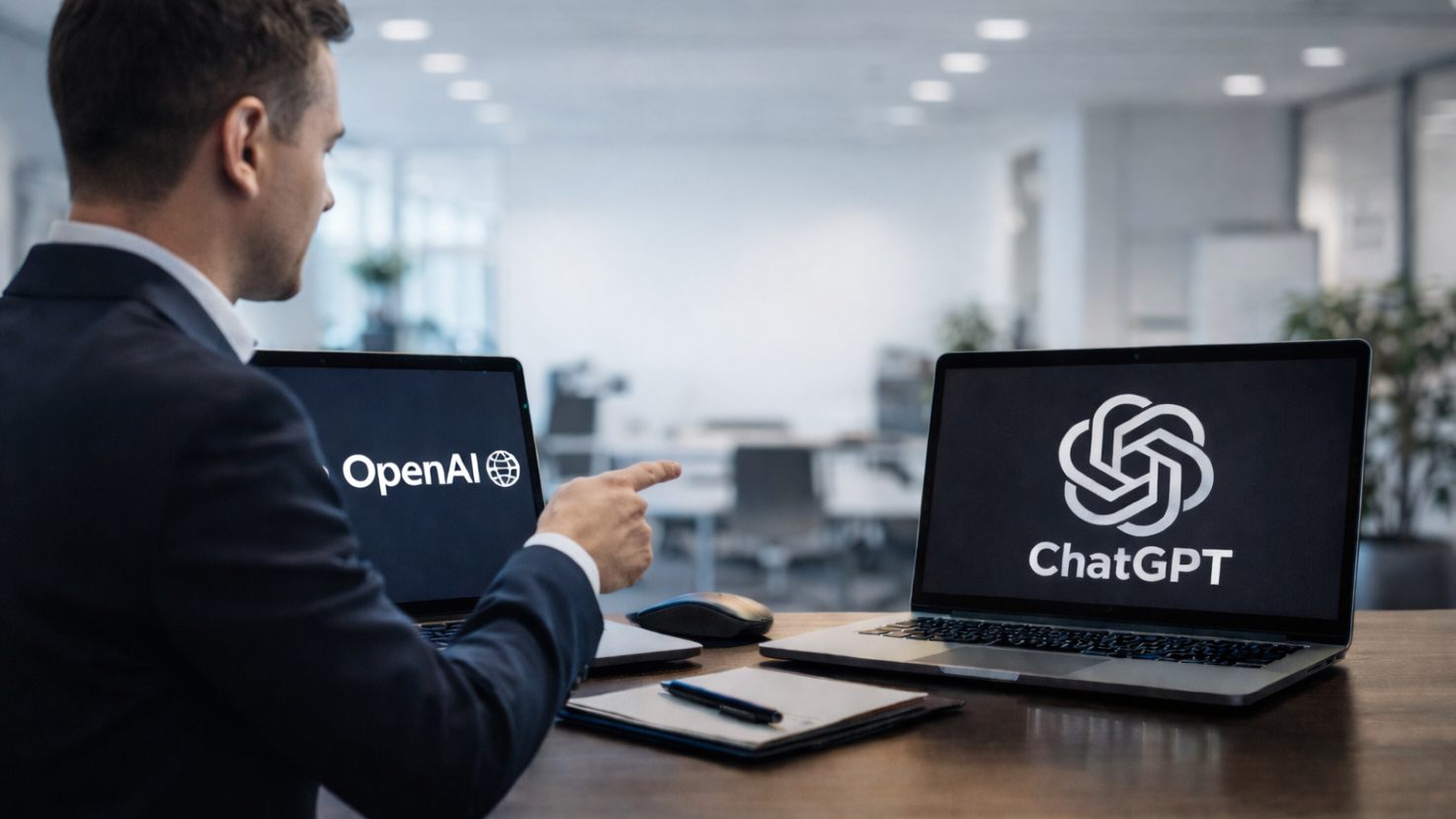
The choice between ChatGPT and Azure OpenAI becomes simple when you define your purpose.
Choose OpenAI ChatGPT for:
Choose Microsoft Azure OpenAI Service for:
It's important to see these not as competitors, but as different tools for different jobs. Many Canadian organizations may even adopt a hybrid approach: equipping employees with ChatGPT for general productivity while their IT and development teams build sophisticated solutions on the Azure OpenAI Service. Ultimately, one is a product you use, and the other is a platform you build on.

Get Unlimited access to ALL the LIVE Instructor-led Microsoft courses you want - all for the price of less than one course.