



Basket
{{item.CourseTitle}}
Price: {{item.ItemPriceExVatFormatted}} {{item.Currency}}
Browse by Topic
Browse by Vendor

Unlimited Training
Attend all the top-notch LIVE Instructor-led Courses you want for the price of less than one course.

Navigating the complex world of digital threats and government regulations is a major challenge for today's businesses. Companies can no longer treat data management and regulatory adherence as an afterthought. This is where Governance, Risk, and Compliance (GRC) frameworks become critical, providing the structure needed for secure and lawful operations. For organizations in the United States, complying with standards like HIPAA, NIST, and FedRAMP is non-negotiable. As a result, the demand for skilled GRC Analysts who can manage these challenges has never been higher.
This article serves as a comprehensive guide for anyone considering a career as a GRC Analyst. Whether you are transitioning from another field, just starting in IT, or looking to specialize, we will provide a clear roadmap. We will delve into the specific responsibilities of the role, the skills needed to excel, and the certifications that will validate your expertise to employers. You will also gain insight into typical career advancement tracks and what you can expect in terms of salary in the current job market.
To grasp the importance of this position, it is crucial to first understand the GRC acronym: Governance, Risk, and Compliance. So, what exactly is a GRC analyst? This professional serves as a vital link between an organization's technical teams and its executive leadership. Their primary function is to ensure the company follows its own internal policies, manages potential risks proactively, and complies with all external laws and regulations. They are the architects and guardians of an organization's security posture and compliance strategy.
Instead of responding to active security incidents, a GRC Analyst focuses on the bigger picture. They work from a corporate office, consulting firm, or government agency to tackle strategic challenges that impact the entire business. Their work involves asking critical questions like, "Are our data protection policies sufficient?" or "How will we recover business operations after a major cyberattack?" This strategic focus separates the role from more technical cybersecurity positions, as it demands a thorough understanding of business operations alongside regulatory landscapes.
The GRC Analyst's duties are built upon three core concepts. In a business setting, Governance represents the internal rules, policies, and structures that direct the organization. Risk involves identifying and assessing any threat to the company’s goals, assets, or public image. Compliance focuses on adhering to external legal and regulatory mandates, such as privacy laws or industry-specific rules.
The daily activities of a GRC Analyst are diverse and impactful. They might spend their morning conducting risk assessments to uncover systemic weaknesses, their afternoon drafting new data handling policies, and the end of the day preparing evidence for an upcoming audit. The overarching goal is to identify organizational vulnerabilities and devise mitigation strategies that protect the business without hindering its operational needs.
Common tasks include:
A GRC Analyst translates complex legal and technical requirements into clear, actionable guidance for other departments. For example, when a new privacy law is passed, the analyst interprets its impact and advises the organization on the necessary steps to remain compliant, preventing costly legal and financial penalties.
The GRC analyst career path offers significant flexibility and room for growth. Professionals often enter this field from various backgrounds, including entry-level IT positions, legal departments, or business analysis roles. There is no single starting point, but the advancement trajectory is well-defined.
A typical career ladder includes these stages:
The path to becoming a GRC analyst begins with acquiring a solid understanding of IT and security principles. While you don't need to be an expert coder, a firm grasp of network operations, server management, and cloud infrastructure is essential. Gaining practical experience is also crucial. You might volunteer for a nonprofit to help develop their security policies or seek an internship within an internal audit team. Networking through professional organizations like ISACA can also provide valuable guidance and job leads.
excelling as a GRC Analyst requires a unique blend of technical and soft skills. While technical knowledge provides the foundation, strong communication and analytical abilities are what truly set a candidate apart. Professionals in this role must often persuade stakeholders to adopt new controls or follow procedures that might seem cumbersome.
Essential GRC skills include:
In the GRC field, professional certifications are a powerful tool for demonstrating your knowledge to potential employers. They provide industry-recognized validation of your skills and mastery of established best practices. While certifications should be paired with hands-on experience, they are often a prerequisite for senior roles.
You should align your certification choices with your career goals. Many professionals find that reviewing job descriptions for target roles helps identify the most in-demand credentials. Some of the best GRC certifications include:
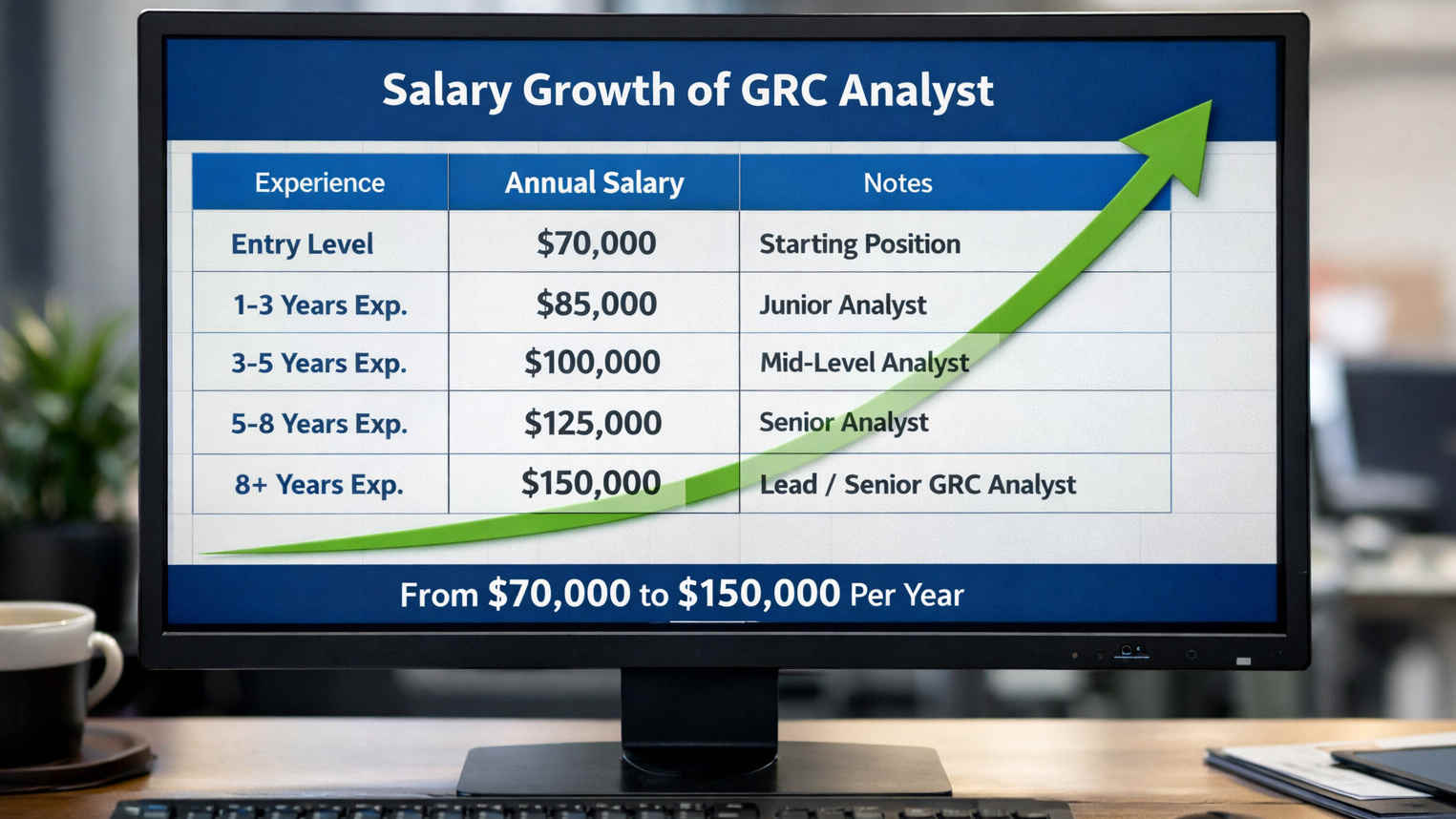
The GRC analyst salary is competitive, reflecting the critical nature of the work. In the United States, an entry-level analyst can expect to earn between $70,000 and $90,000 per year. With several years of experience and relevant certifications, that figure often rises above $120,000 and can surpass $150,000 for senior or specialized roles.
The job market for GRC expertise is exceptionally strong and stable. As cybersecurity threats evolve and governments introduce more stringent regulations, organizations across all sectors—especially finance, healthcare, and tech—must hire qualified professionals to stay compliant. This creates lasting job security and supports robust compensation levels.
A career in GRC is an excellent choice for individuals who enjoy structured problem-solving and strategic thinking. If you have an interest in technology but prefer to focus on policy and strategy rather than hands-on coding, this role offers a perfect middle ground. The work is highly meaningful, as you will be directly responsible for protecting your organization and its customers from significant harm.
While the work can be methodical and document-heavy, the long-term career prospects are outstanding. The role provides a unique vantage point over business operations and offers clear pathways to executive leadership. If you are an organized, curious, and communicative individual, a career in GRC could be an incredibly rewarding professional journey.

Get Unlimited access to ALL the LIVE Instructor-led Security courses you want - all for the price of less than one course.