



Basket
{{item.CourseTitle}}
Price: {{item.ItemPriceExVatFormatted}} {{item.Currency}}
Browse by Topic
Browse by Vendor

Unlimited Training
Attend all the top-notch LIVE Instructor-led Courses you want for the price of less than one course.

If you are an experienced software developer, system administrator, or project manager aiming to advance your career, this strategic guide is designed for you. It lays out a clear roadmap for leveraging your existing skills to become a leader in the fast-growing field of DevOps.
This article explores the journey toward becoming a Microsoft Certified: DevOps Engineer Expert by conquering the AZ-400 exam. We will cover the core principles of the role, the value of specializing in Azure, and the specific competencies you need to prove your expertise. Let's begin building your career path.
The demand for skilled DevOps professionals is skyrocketing. The global market, valued at $7 billion in 2021, is projected to surge to $26 billion by 2027. This reflects a compound annual growth rate of 24.6%, positioning DevOps as a premier career choice for tech professionals. As cloud adoption becomes standard practice for businesses, the need for engineers who can streamline software delivery continues to grow without slowing down.
The DevOps landscape is constantly evolving with new tools and practices. Companies recognize the immense value of DevOps engineers who can navigate this dynamic environment, often rewarding them with excellent compensation and benefits to ensure retention. In turn, professionals in this field must remain dedicated to continuous learning to stay ahead of the curve and master emerging industry standards.

Image Source: TheRegister
At its core, the term DevOps represents the integration of two traditionally separate functions: Development and Operations. Historically, developers would write and test code for an application, while a distinct operations team would handle its deployment and maintenance on servers. This separation often created friction and delays.
A DevOps expert acts as the crucial link that unifies these two worlds. By implementing automation, fostering collaboration, and integrating processes, they empower organizations to build, test, and release software with greater speed and reliability. These professionals are masters of agile methodologies, continuous integration (CI), and continuous deployment (CD).
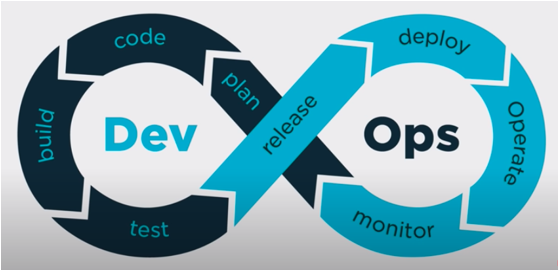
The familiar DevOps logo, an infinity symbol, illustrates this continuous lifecycle: planning, coding, building, testing, releasing, deploying, operating, and monitoring. The DevOps engineer is central to this entire process, working closely with programmers and IT staff to manage the flow of code from development to the end-user.
For businesses operating online, a primary objective is to deliver code to customers more efficiently. This is often achieved through a CI/CD pipeline, which allows any new feature or bug fix to be deployed with a single button click. DevOps engineers are essential for designing and optimizing these pipelines to improve collaboration and automate delivery.
Microsoft Azure is a leading provider in the "Infrastructure as a Service" market, alongside competitors like AWS and Google Cloud. Its Azure DevOps platform, a Software as a Service (SaaS) offering, provides a complete toolchain that supports not only Microsoft’s own tools but also integrates seamlessly with third-party applications like Jira, Jenkins, and SonarQube.
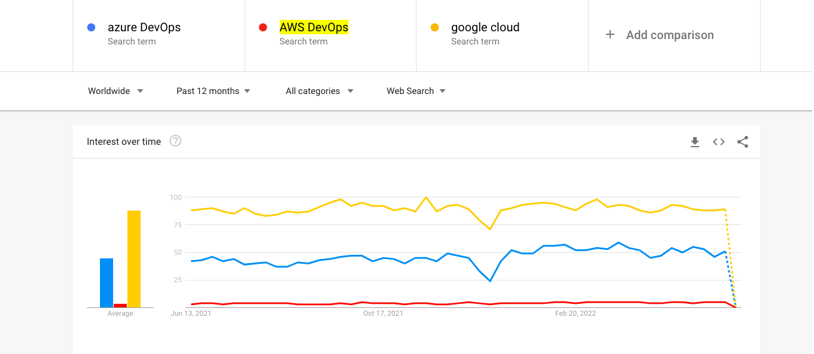
This integrated and flexible approach has helped Microsoft secure a significant portion of the cloud market. Unlike some competitors, Azure DevOps is not limited to deployments within the Microsoft ecosystem. A quick look at Google Trends confirms that Azure DevOps consistently garners more interest than its AWS counterpart.
To succeed as a DevOps engineer and eventually pass the AZ-400, you need a robust and varied skill set. The following areas are critical prerequisites:
To earn the prestigious Microsoft Certified: DevOps Engineer Expert certification, you must first hold one of two prerequisite certifications: the AZ-104 for Microsoft Azure Administrator Associate or the AZ-204 for Azure Developer Associate. After meeting that requirement, you only need to pass the AZ-400: Designing and Implementing Microsoft DevOps Solutions exam.
The AZ-400 is an expert-level assessment designed for professionals who implement DevOps processes in an enterprise setting. The exam costs $165 and you are allotted three hours to answer 40-60 questions. A score of 700 out of 1000 is required to pass. The questions are primarily multiple-choice, and with no penalty for incorrect answers, it is best to attempt every question. The exam also includes case studies and "fill in the block" code snippets to assess your practical knowledge.
The AZ-400 curriculum is extensive. While the following list is not exhaustive, it provides a high-level overview of the skills you will need to master. The exam content is weighted across several key domains:
Your preparation should also cover establishing continuous feedback mechanisms and integrating third-party tools like SonarCloud for code quality analysis.
While you don’t need to be an expert application programmer, the answer is that coding knowledge significantly helps. Proficiency in a scripting language like Python, Bash, or Ruby is highly advantageous and can lead to more attractive job offers. A DevOps engineer may not write the core application code, but they must understand repository workflows, application configuration, and the principles of automated testing to build effective pipelines.
If you have an engineering mindset and enjoy seeing complex systems work together seamlessly, a career in DevOps could be an ideal fit. While a certification is not the only path to a job, it provides a structured learning framework and builds the confidence needed to excel in interviews. Employers seeking an Azure DevOps Engineer are more likely to invest in certified candidates, as it validates a baseline of expertise.
When it comes to preparing for the exam, you have options. Self-study with free materials is possible, but maintaining the discipline required for the AZ-400 can be difficult alongside a full-time job. This is why leading companies rely on Readynez’s proven exam preparation methodology to ensure their teams can pass the AZ-400 efficiently.
Whichever path you take, ensure your study plan includes the latest curriculum, extensive practice tests, and access to mentorship. We hope this roadmap provides clarity on your path to becoming a Certified DevOps Engineer.
For organizations looking to build DevOps capabilities, reach out to us. Our team can help design a customized learning program to equip your staff with the critical certifications needed to drive your company’s success.

Get Unlimited access to ALL the LIVE Instructor-led Microsoft courses you want - all for the price of less than one course.