



Basket
{{item.CourseTitle}}
Price: {{item.ItemPriceExVatFormatted}} {{item.Currency}}
Browse by Topic
Browse by Vendor

Unlimited Training
Attend all the top-notch LIVE Instructor-led Courses you want for the price of less than one course.

As a project manager, you operate in a competitive landscape. You have the experience and the drive, but how do you signal your expertise to employers and unlock the next level of opportunity? The Project Management Professional (PMP) certification is often presented as the definitive answer, a credential recognized across industries like IT, healthcare, finance, and construction. But is it the right strategic investment for you?
This guide moves beyond the surface-level benefits to provide a clear-eyed analysis. We'll break down the tangible returns, the full scope of the costs, and what it truly takes to earn this certification. By the end, you'll have the information you need to decide if pursuing the PMP is a smart move for your career trajectory.
The demand for skilled project leaders is surging, with the Project Management Institute (PMI) projecting the creation of nearly 22 million new project-focused jobs by 2027. In this growing field, a PMP certification acts as a powerful differentiator. It's more than just a line on your resume; it is third-party validation of your ability to lead projects to successful completion.
Financially, the impact is significant. A recent PMI salary survey revealed that PMP certified professionals in North America earn an average of 25% more than their non-certified peers. This credential enhances your professional credibility, demonstrating a commitment to the field that resonates with employers globally. It also grants you access to a worldwide network of professionals, opening doors to opportunities in over 80 countries where the PMP is a trusted standard.
Achieving PMP certification requires a significant front-end investment of both time and money. Understanding these costs is crucial for a proper ROI analysis.
PMI has established specific criteria to ensure candidates have sufficient real-world experience. There are two primary pathways to eligibility:
The PMP exam is a rigorous test designed to evaluate your competency in real-world scenarios. It is not a test of memorization but of application. The exam covers three key domains, weighted differently:
The exam consists of 180 questions that you must complete in 230 minutes. It's a closed-book test with no scheduled breaks. Questions are a mix of multiple-choice, multiple-response, matching, and hotspot formats, reflecting the complex situations project managers face. The exam now fully incorporates Predictive (waterfall), Agile, and Hybrid approaches, so you must be fluent in all three.
PMI does not publish a specific passing score. Instead, your performance is rated across each domain as 'Above Target', 'Target', 'Needs Improvement', or 'Below Target'. To pass, you generally need to achieve a 'Target' rating or higher across the board.
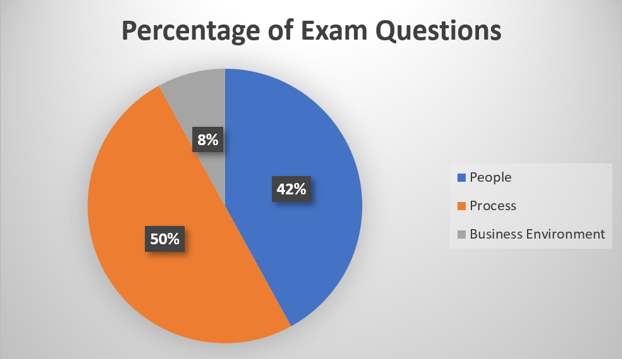
Image Source: Peak Business
Given the exam's difficulty and cost, a structured preparation plan is essential. Success isn't about memorizing the PMBOK® Guide; it's about understanding how to apply its principles.
The PMP certification is a demanding but rewarding endeavor. The financial return, career security, and professional recognition it offers are undeniable. While the preparation is intense and the costs are not trivial, the long-term benefits can far outweigh the initial investment.
If you are ready to take this step, you don't have to do it alone. At Readynez, our expert-led training programs are designed to equip you with the knowledge and confidence needed to pass the PMP exam on your first attempt. Many employers recognize the value of certification and are willing to sponsor their project managers. Consider discussing this opportunity with your manager as an investment in both your growth and the organization's success.

Get Unlimited access to ALL the LIVE Instructor-led Microsoft courses you want - all for the price of less than one course.