



Basket
{{item.CourseTitle}}
Price: {{item.ItemPriceExVatFormatted}} {{item.Currency}}
Browse by Topic
Browse by Vendor

Unlimited Training
Attend all the top-notch LIVE Instructor-led Courses you want for the price of less than one course.

Cybersecurity leadership in a large organization has moved from a technical support function to a strategic enterprise imperative. Executive leaders are now evaluated on their ability to protect company assets and maintain customer trust amid escalating digital threats. For security professionals aspiring to these senior roles, choosing a credential that matches organizational needs is a pivotal career decision. This decision goes beyond personal development; it’s about acquiring the right framework to manage risk, ensure compliance, and steer the company securely.
While many certifications exist, three stand out for seasoned professionals: the Certified Information Systems Security Professional (CISSP), Certified Information Security Manager (CISM), and Certified Cloud Security Professional (CCSP). Rather than viewing them as interchangeable, it’s more effective to map them to the specific business risks you are tasked with mitigating. This guide examines each certification through the lens of enterprise risk, helping you determine which credential will be most impactful for your role and your organization’s security posture.
A common challenge in mature enterprises is a sprawling and often disjointed security infrastructure. This risk manifests as inconsistent policies, siloed security tools, and a lack of a unified defense-in-depth strategy. Addressing this requires a leader with a comprehensive, 360-degree understanding of every facet of information security.
The CISSP is the definitive credential for leaders facing this challenge. It is recognized as the "gold standard" because its eight domains cover the entire security ecosystem—from network and communication security to identity and access management, security testing, and software development security. It forces a holistic perspective, ensuring leaders can design and manage a cohesive, enterprise-wide security program.
For a professional whose responsibilities include overseeing diverse technical teams, drafting overarching security policies, and engineering a resilient security architecture, the CISSP provides the essential, broad-based knowledge required. It validates your ability to connect all the technical and operational pieces into a single, defensible whole.
When the security department is perceived as a cost center or a blocker to innovation, it signals a significant governance risk. This misalignment can prevent the organization from making informed decisions about its risk appetite, lead to poor resource allocation for security initiatives, and create friction with the board of directors.
This is the domain of the CISM. Unlike technically focused certifications, the CISM is designed for the business side of security. It is the premier credential for leaders who need to build, manage, and govern an information security program that directly supports enterprise goals. Its focus is not on algorithms but on strategy, investment, and communication.

The CISM curriculum is centered on four key areas: Information Security Governance, Information Risk Management, Information Security Program Development and Management, and Incident Management. Earning a CISM demonstrates your ability to speak the language of the C-suite, justify security ROI, and establish a governance framework that aligns with the organization’s strategic objectives. It is the ideal choice for aspiring CISOs and current security executives focused on strategy and governance.
The rapid migration to cloud services like AWS and Azure has introduced a new and complex risk landscape. Many organizations adopt cloud technologies without fully understanding the shared responsibility model, leading to misconfigurations that can cause catastrophic data breaches. Securing data across multiple cloud providers while adhering to regulations such as HIPAA or FedRAMP is a major challenge.
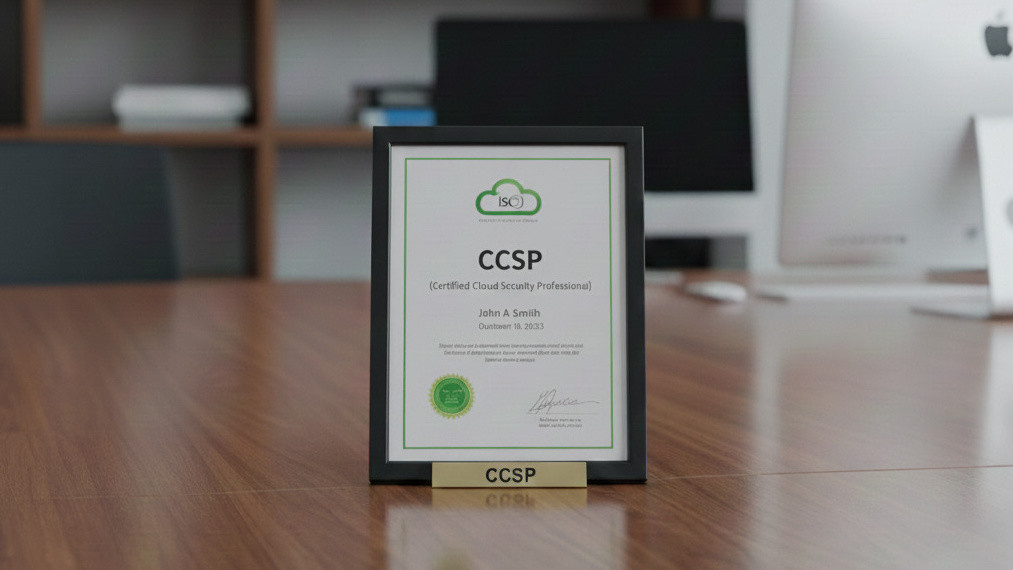
The CCSP was created specifically to address this critical risk area. This specialized certification validates a leader's expertise in designing, managing, and securing data, applications, and infrastructure in the cloud. It goes far beyond general security principles to cover the unique technical and legal challenges of cloud computing.
A leader with a CCSP is equipped to manage the nuances of multi-cloud environments, audit cloud vendors, and implement robust data protection and identity management strategies for SaaS and IaaS platforms. If your organization is cloud-first or undergoing a major digital transformation, the CCSP provides the necessary skills to lead this transition securely, ensuring that innovation does not come at the expense of safety.
It is important to understand that these leadership credentials are not competitors; they represent different, but often overlapping, areas of expertise. A security leader’s path may involve acquiring more than one to build a truly comprehensive skill set.
The right certification depends entirely on your current responsibilities and career aspirations within your organization’s structure.
| Primary Role / Responsibility | Most Relevant Certification | Core Focus Area |
| Overseeing complex, hybrid infrastructure and managing diverse technical security teams. | CISSP | Broad security architecture and operations. |
| Reporting to the board, developing security strategy, and managing enterprise risk. | CISM | Governance, business alignment, and risk management. |
| Leading cloud migration, securing SaaS/IaaS platforms, and managing cloud provider contracts. | CCSP | Specialized cloud security and compliance. |
Pursuing an advanced security certification is an investment that pays dividends for both the individual and the enterprise. For the professional, these credentials bring immediate industry credibility and validate a global standard of expertise. For the organization, employing certified leaders is a direct form of risk mitigation.
Organizations led by professionals with CISSP, CISM, or CCSP certifications can more easily demonstrate due diligence to auditors, regulators, and partners. This builds trust and confidence among all stakeholders. Furthermore, the continuing education requirements for these certifications foster a culture of perpetual learning, ensuring your leadership team stays current with guidance from bodies like CISA and evolving threat landscapes. This commitment to expertise is essential for building a resilient enterprise capable of thriving in a complex digital world.

Get Unlimited access to ALL the LIVE Instructor-led Microsoft courses you want - all for the price of less than one course.