



Basket
{{item.CourseTitle}}
Price: {{item.ItemPriceExVatFormatted}} {{item.Currency}}
Browse by Topic
Browse by Vendor

Unlimited Training
Attend all the top-notch LIVE Instructor-led Courses you want for the price of less than one course.

In today's economy, businesses are accumulating data at an unprecedented rate. Yet, many are struggling to convert this raw information into actionable insights. The familiar adage "garbage in, garbage out" has never been more relevant, as the effectiveness of advanced tools like AI and machine learning hinges entirely on the quality of the underlying data. This gap between data accumulation and data utilization has created a surge in demand for a specialized professional: the Azure Data Engineer.
Organizations recognize that simply hiring data scientists isn't enough. They require experts who can architect and manage the digital plumbing—building robust, high-quality data pipelines that empower the entire business. From securing scattered data troves against cyber threats to establishing strong data governance, the data engineer lays the critical foundation for a data-driven culture. This demand, amplified by the digital acceleration of recent years, has made a career in Azure data engineering both lucrative and stable.
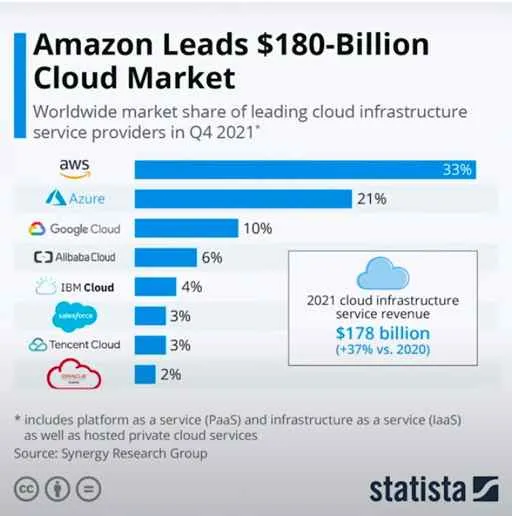
So, what does an Azure Data Engineer do day-to-day? Their primary role is to design, implement, and manage the systems that provide clean, reliable, and accessible data. Think of them as the architects of an organization's data ecosystem. They use the full suite of Azure data tools to build and maintain data pipelines, ensuring security, privacy, and performance meet business requirements. Their work is the essential upstream process that enables data scientists and analysts to uncover trends, generate reports, and build predictive models.
Key responsibilities often revolve around:
It's common for newcomers to confuse the roles of a data engineer and a data scientist. The distinction is simple: engineers build the infrastructure, while scientists use that infrastructure to analyze data. The data engineer sources, cleans, and structures the information, making it available in a usable format. Data scientists and analysts then take this prepared data to perform complex analysis, generate insights, and build machine learning models. In any organization with a mature data program, the data engineering team is a prerequisite for the data science team to succeed.
To qualify for the DP-203 certification and succeed in the field, a specific skill set is required. Employers look for a blend of foundational knowledge and platform-specific expertise.
A successful candidate must possess a strong command of data processing languages like SQL, Python, or Scala, along with a solid grasp of data architecture patterns and parallel processing. An employer might look for some of the following qualifications:
Beyond technical abilities, data engineers must be excellent collaborators. The role requires constant interaction with different teams and departments to understand data needs and ensure the solutions provided are truly valuable. Strong communication and storytelling skills are essential for driving projects forward.
To formalize your skills, you must pass the DP-203 exam, which earns you the title of Microsoft Certified Azure Data Engineer Associate. This certification validates your ability to handle the core responsibilities of the role and is often a key credential sought by employers.
The exam measures your skills across several key domains:
You can expect to face 40-60 questions in various formats, including multiple-choice, drag-and-drop sequencing, and case studies. With a 120-minute time limit, you need a score of 700 out of 1000 to pass.
Earning the DP-203 certification is a significant achievement, but it is one part of a larger career strategy. The certificate validates your knowledge, but landing a top job also requires networking and practical demonstration of your skills. Attending local data engineering meetups and engaging with the community on social media can be invaluable.
When it comes to preparation, you have options. Microsoft provides a free learning path on its official site, which is a great resource for disciplined self-starters. However, for working professionals or those new to the field, navigating the extensive curriculum can be challenging.
For this reason, many candidates prefer a more structured approach. An instructor-led training program like Readynez offers practical, hands-on learning and expert guidance. This format provides the mentorship needed to not only learn the material but also to understand how to apply it in real-world scenarios, which is critical for clearing the exam and succeeding in your career.
If you have questions about the Azure Data Engineer career path or the DP-203 exam, we are here to help. Please feel free to get in touch with our team.

Get Unlimited access to ALL the LIVE Instructor-led Microsoft courses you want - all for the price of less than one course.