





Basket
{{item.CourseTitle}}
Price: {{item.ItemPriceExVatFormatted}} {{item.Currency}}
Browse by Topic
Browse by Vendor

Unlimited Training
Attend all the top-notch LIVE Instructor-led Courses you want for the price of less than one course.

In today's rapidly accelerating technology sector, cloud computing has transitioned from a specialized field to the operational backbone of modern business. For IT professionals, this means the required skill sets are in constant flux. Navigating the crowded landscape of cloud certifications for 2025 can feel overwhelming, but making a strategic choice is essential for career advancement. It’s no longer about simply collecting credentials; it’s about demonstrating mastery in the areas that matter most to employers.
This guide provides a roadmap for aligning your professional development with the core demands of the industry. We will explore the foundational pillars of modern cloud expertise, map them to specific high-value certifications, and offer a clear strategy for building a learning plan that ensures you remain indispensable in a competitive job market.
To make sense of the dozens of available certifications, it helps to understand the fundamental forces shaping the industry. These are not just trends but core pillars of competence that employers are actively seeking. Your certification choices should prove your capabilities in these key domains.
The era of single-provider dominance is over. Most organizations now operate across a mix of on-premises infrastructure and multiple public clouds, such as AWS, Azure, and Google Cloud. While this approach provides resilience and prevents vendor lock-in, it introduces substantial management complexity. Consequently, professionals who can architect, deploy, and govern resources across these disparate systems are in high demand. Certifications are adapting to validate cross-platform skills and knowledge of tools that enable seamless multi-cloud management.
As organizations migrate more sensitive data and mission-critical workloads to the cloud, security has become the foremost concern. The threat landscape is increasingly sophisticated, making expertise in cloud security non-negotiable. Certifications in this domain are evolving to address complex challenges like identity and access management (IAM), data encryption, and securing containerized applications. Moreover, a deep understanding of compliance frameworks is crucial. Professionals must demonstrate knowledge of regulations like HIPAA for healthcare data and standards from bodies like NIST, proving they can build and maintain environments that meet strict regulatory requirements.
Artificial intelligence and machine learning are no longer niche specialties; they are being woven into the fabric of cloud services. From advanced data analytics to AIOps, intelligent tools are changing how cloud environments are managed. Certifications for 2025 reflect this shift, requiring professionals to show they can leverage cloud-native AI services and implement automation at scale. The ability to manage infrastructure through code (IaC) and automate operational tasks is now a baseline expectation for many roles.
Choosing the right certification depends heavily on your current or desired role. Instead of chasing every new credential, focus on specializations that deepen your expertise and align with market demand.
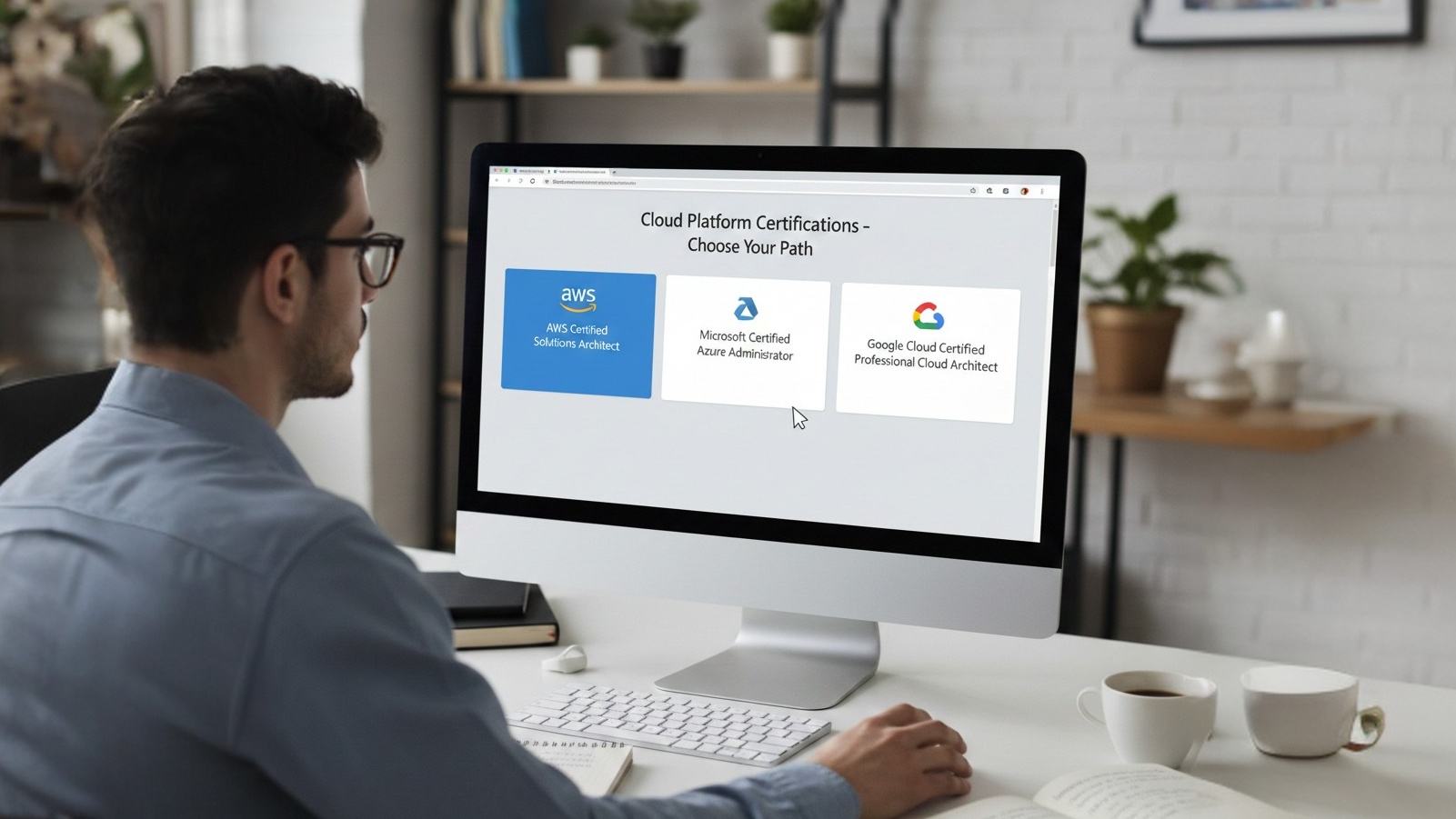
Given the rise in cyber threats, security-focused credentials are among the most valuable. These certifications validate advanced skills beyond basic platform knowledge. Leading options include the vendor-neutral ISC2 Certified Cloud Security Professional (CCSP), which provides a comprehensive understanding of cloud security principles. For platform-specific expertise, the AWS Certified Security - Specialty and Microsoft Certified: Azure Security Engineer are highly respected for demonstrating hands-on skills in securing their respective platforms.
These certifications cover critical areas such as:
As AI reshapes industries, professionals who can build and manage a company's data infrastructure are essential. Advanced data engineering certifications are some of the best you can earn. The Google Professional Data Engineer, for example, is highly regarded for its focus on designing, building, and maintaining scalable data processing systems. These credentials validate expertise in MLOps (managing machine learning models in production), leveraging pre-built AI services for vision or language processing, and setting up automated monitoring to ensure system health.
A surprising but rapidly growing area of specialization is FinOps, or cloud financial operations. As organizations' cloud spending grows, so does the need for professionals who can manage, analyze, and optimize those costs. FinOps certifications teach the critical skills of cloud cost management, helping businesses achieve financial efficiency without sacrificing performance. This is a unique specialization that can provide a significant competitive advantage.
A structured approach is the best way to tackle your certification journey. Follow these practical steps to build a personalized and effective learning roadmap.
The certification landscape will not stand still. As technology matures, new areas of expertise will emerge. Looking beyond 2025, we can anticipate the rise of credentials in fields like quantum computing and decentralized cloud architectures. Certifications will likely become more modular, with micro-credentials and digital badges allowing professionals to showcase very specific, in-demand skills.
Ultimately, the most important takeaway is the commitment to continuous learning. A certification is a snapshot of your knowledge at a particular moment. Staying relevant in the long term depends on your willingness to adapt and reskill as the cloud industry continues its relentless innovation. A well-planned certification roadmap is your best tool for ensuring you are not just keeping up but leading the way.

Get Unlimited access to ALL the LIVE Instructor-led Microsoft courses you want - all for the price of less than one course.