



Basket
{{item.CourseTitle}}
Price: {{item.ItemPriceExVatFormatted}} {{item.Currency}}
Browse by Topic
Browse by Vendor

Unlimited Training
Attend all the top-notch LIVE Instructor-led Courses you want for the price of less than one course.

Selecting the right cloud infrastructure is one of the most critical technology decisions a modern UK business can make. Two giants dominate this landscape: Amazon Web Services (AWS) and Microsoft Azure. While both offer a powerful suite of services, they stem from different philosophies and present distinct advantages depending on your organisation’s existing infrastructure, goals, and skillsets.
This guide moves beyond a simple feature list to help you understand the core strategic differences, enabling you to make a more informed decision.
A primary decision factor is how a cloud platform fits with your current software environment. For the tens of thousands of UK companies already embedded in the Microsoft ecosystem, Azure presents a compelling case. As a Microsoft product launched in 2010, it offers seamless integration with essential tools like Office 365 and Teams. This makes it an almost native extension for organisations that rely on Microsoft services, a fact underscored by its adoption by nearly 80% of Fortune 500 companies. Azure provides a Virtual Network Cloud (VNC) for enhanced security and robust support for both Linux and Windows environments.
In contrast, AWS, which pioneered the market in 2006, operates more as a one-stop-shop, standalone powerhouse. It is renowned for its sheer breadth and depth, offering over 175 services across domains like analytics, storage, IoT, and security. Its Virtual Private Cloud (VPC) allows organisations extensive control over their network. This comprehensive, multi-feature approach has made it the choice for digital-native giants like Netflix and Pinterest, and it remains the dominant force with a significant market share.

Your organisation's approach to cloud adoption is another critical consideration. Microsoft Azure has carved out a reputation as the leader in hybrid cloud solutions. It excels at creating a bridge between on-premise data centres and the public cloud, offering flexibility for businesses that aren't ready or able to go "all-in" on the cloud. This capability is a significant draw for established enterprises with legacy systems.
While AWS also provides strong hybrid capabilities, its primary strength lies in its comprehensive, all-encompassing cloud environment. For businesses starting fresh or aiming for a complete migration, AWS offers an incredibly powerful and scalable global presence, making it an excellent choice for large enterprises with extensive needs.
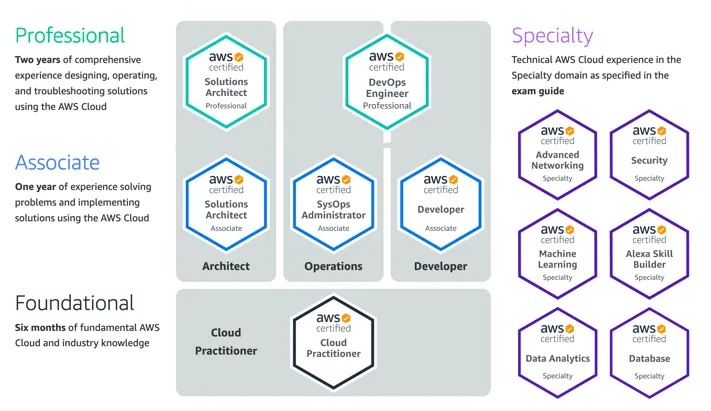
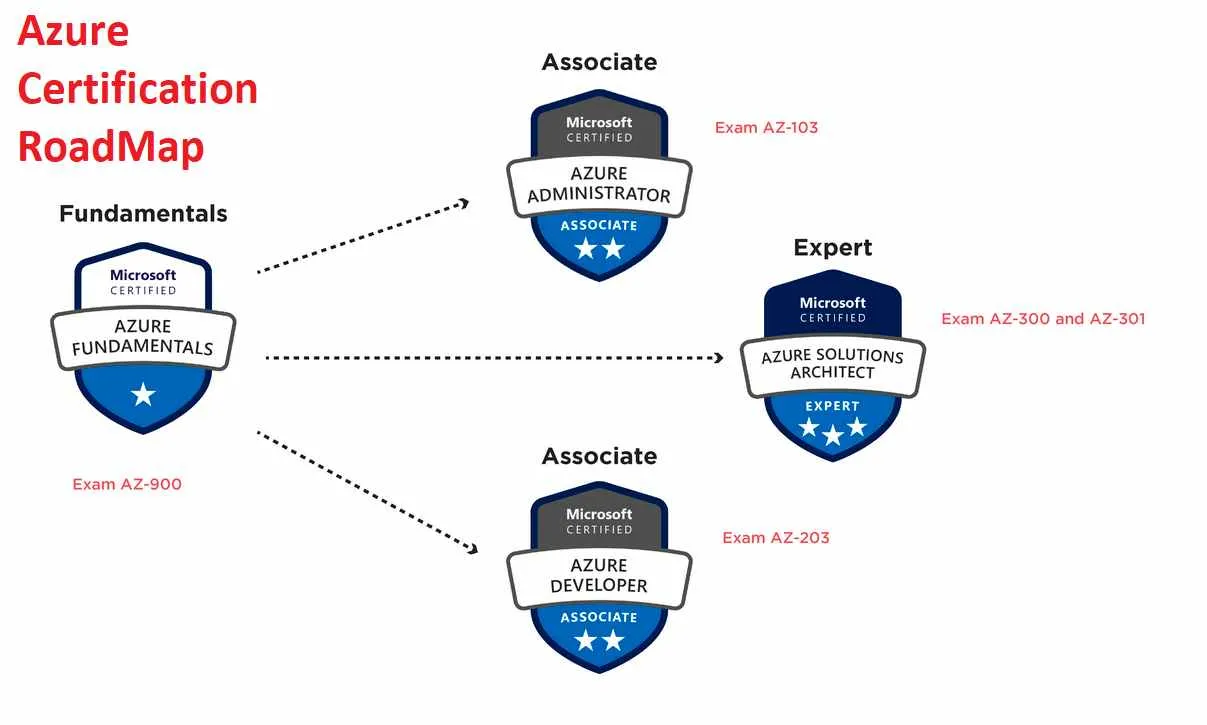
A cloud platform is only as good as the team that manages it. Both AWS and Azure offer well-defined certification roadmaps to validate skills, from foundational levels like Azure Fundamentals or AWS Certified Cloud Practitioner (CCP) to advanced professional specialisations.
Historically, these certifications targeted technical IT roles. However, there is a growing trend to equip non-technical staff in sales, marketing, and management with cloud knowledge, ensuring the entire organisation is familiar with the tools it uses. The best path depends on your company’s chosen platform and your employees' career goals. While committing to one platform is common, a multi-platform skillset is becoming increasingly valuable in the UK tech sector.
Ultimately, there is no single "best" provider. The choice between Azure and AWS is a strategic one. If your organisation is deeply integrated with Microsoft products and values a smooth hybrid cloud experience, Azure is an intuitive and powerful option. If your priority is breadth of services, market leadership, and a platform built for massive scale, AWS remains a formidable choice.
The best decision starts with a clear-eyed assessment of your business needs, existing technical environment, and long-term goals. By understanding the core philosophies of each platform, you can select the partner that will best accelerate your digital transformation journey.

Get Unlimited access to ALL the LIVE Instructor-led Security courses you want - all for the price of less than one course.
You're viewing our UK (GBP) site from United States
Would you like to view the site in
English
with prices in
Dollar?