



Basket
{{item.CourseTitle}}
Price: {{item.ItemPriceExVatFormatted}} {{item.Currency}}
Browse by Topic
Browse by Vendor

Unlimited Training
Attend all the top-notch LIVE Instructor-led Courses you want for the price of less than one course.

Many modern businesses are sitting on a potential goldmine of data. The problem is that this data is often disorganised, siloed across various systems, and difficult to access. Without a solid structure for managing this information, its value remains locked away. This is where the crucial role of a data engineer comes into focus.
The principle of "garbage in, garbage out" is especially true in the world of Artificial Intelligence (AI) and Machine Learning (ML). The effectiveness of these advanced technologies is entirely dependent on the quality of the data they are fed. Businesses across the UK recognise this; they know that simply employing data scientists isn’t enough. They require specialists who can construct and maintain robust data pipelines, ensuring a consistent flow of high-quality information for analysis.
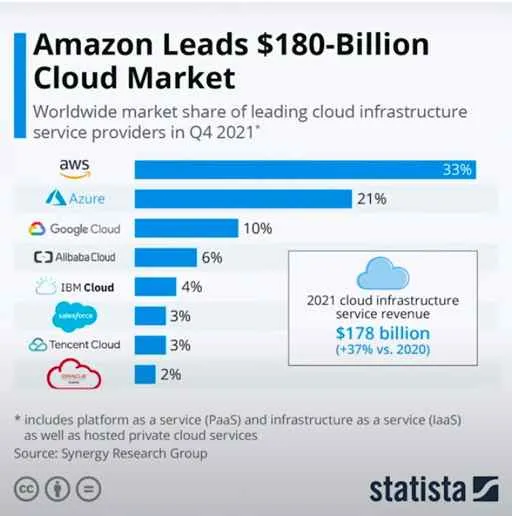
This growing reliance on data-driven decisions, particularly in the post-pandemic shift to online operations, has created a significant demand for skilled data engineers. As companies increasingly migrate to cloud platforms like Microsoft Azure, the second-largest provider after AWS, the need for certified Azure Data Engineers has surged. This supply-and-demand gap has led to attractive salary packages for qualified professionals.
The primary function of an Azure Data Engineer is to design, implement, and manage the systems that provide data to an organisation. They build the data infrastructure that others, like data scientists and analysts, rely on. Their responsibilities are centred around sourcing, organising, and managing data effectively.
This wide-ranging role includes tasks such as:
While some roles specialise, for instance focusing on pipeline creation or database management, the core purpose is always to make clean, accessible data available for analysis and informed decision-making.
It's common for newcomers to confuse the roles of a data engineer and a data scientist. A simple way to understand the difference is that the data engineer builds the reservoirs and pipelines to deliver the data, while the data scientist analyses the data that flows through them. The engineer works at the source to make data available; the scientist then works on that available data to extract insights.
Any organisation employing data scientists or analysts fundamentally needs data engineers to supply them with usable information. The engineer’s job is to source data based on the analysts’ requirements and deliver it in a useful format. In some smaller companies or generalist roles, these responsibilities might overlap, but the foundational distinction remains.
To succeed as an Azure Data Engineer and be ready for the DP-203 certification, a candidate needs a strong blend of technical knowledge and practical skills. Employers in the UK will typically look for a solid foundation in the following areas.
While deep programming expertise isn't always mandatory from day one, having clean, understandable coding skills is vital for long-term growth. Code that only you can understand will limit your impact and career progression.
Technical ability alone is not enough. Data engineers must collaborate across departments to map out data needs and ensure the information they provide is genuinely useful. Strong communication, collaboration, and even storytelling skills are necessary to persuade teams and stakeholders, helping to move projects forward efficiently.
The official route to becoming a Microsoft Certified Azure Data Engineer is by passing the DP-203 exam. This certification is a powerful validation of your skills and is often pursued by data analysts looking to advance their careers into a more senior engineering role.
The exam assesses your ability across four key domains:
You can expect between 40 and 60 questions, which may include multiple-choice, drag-and-drop sequences, and scenario-based problems. The exam lasts 120 minutes, and a score of 700 out of 1000 is required to pass.
A certification validates your expertise, but it doesn’t guarantee a job offer. It's a crucial part of your profile, but you still need to be proactive. Actively apply for roles, and enhance your visibility by attending local data engineering events and networking with industry professionals on platforms like Twitter and LinkedIn.
While Microsoft provides a comprehensive learning path here for self-study, this route requires significant time and discipline. For those already in full-time employment, such as a data analyst looking to upskill, balancing work and self-directed learning can be a major challenge. The breadth of the curriculum can feel overwhelming without a clear starting point.
For this reason, many professionals prefer a more structured approach. An instructor-led training course like Readynez provides practical, hands-on learning and expert guidance. These focused programmes are designed to give you the mentorship and knowledge needed to pass the exam efficiently.
If you have further questions about this career path or the DP-203 certification, please get in touch with our team.

Get Unlimited access to ALL the LIVE Instructor-led Microsoft courses you want - all for the price of less than one course.
You're viewing our UK (GBP) site from United States
Would you like to view the site in
English
with prices in
Dollar?